Related: Golf Club Loft Explained What Each Club Is For
I've been playing golf for twelve years, and for six of those I was behind the counter at a big-box store, regripping clubs and watching the markup math happen in real time. I shoot in the low 90s. I have a spreadsheet with every ball hit, round played, and month owned for every piece of gear I've tested.
And after all that, I can tell you that golf ball compression is the most misunderstood spec in the game.
This article explains low versus high compression, what it actually does to your ball flight, and which balls I'd put in play based on how you swing.
You don't need a 110 mph swing speed to care about compression. You need to know which ball holds up, which one feels like a rock, and which one is going to give you the most distance for your dollar. I've hit hundreds of balls into my patched-up KLAODOT net with an aftermarket mat, and I've logged rounds with every ball below. Here's what matters.
Why you should trust me
I'm Dan. I spent six years fitting clubs and regripping shafts at a big-box golf store, and now I test gear so you don't have to. I've got a 75-pound golden retriever named Gus who sleeps on my practice net, and I've got a spreadsheet tracking every ball I've hit, every round played, and every month owned for the gear I review.
I don't have a launch monitor and I'm not going to pretend to be a swing coach. I test balls the way you use them: real rounds, real bags, real months in the trunk of my car.
How I picked and how I tested
My criteria were simple. Does the ball hold up to a full round without scuffing? Does it feel decent off the putter face? And most importantly, does it fly the way the compression rating suggests it should? I spent a month rotating through six balls, playing my local track (my new course doesn't have yardage markers, so I was also testing my REVASRI rangefinder on every shot).
I hit each ball for at least two full rounds, plus practice sessions into the net. I checked buyer reports for complaint patterns, especially around durability and feel.
I also paid attention to what actually broke or failed, because that's the only way to learn anything.
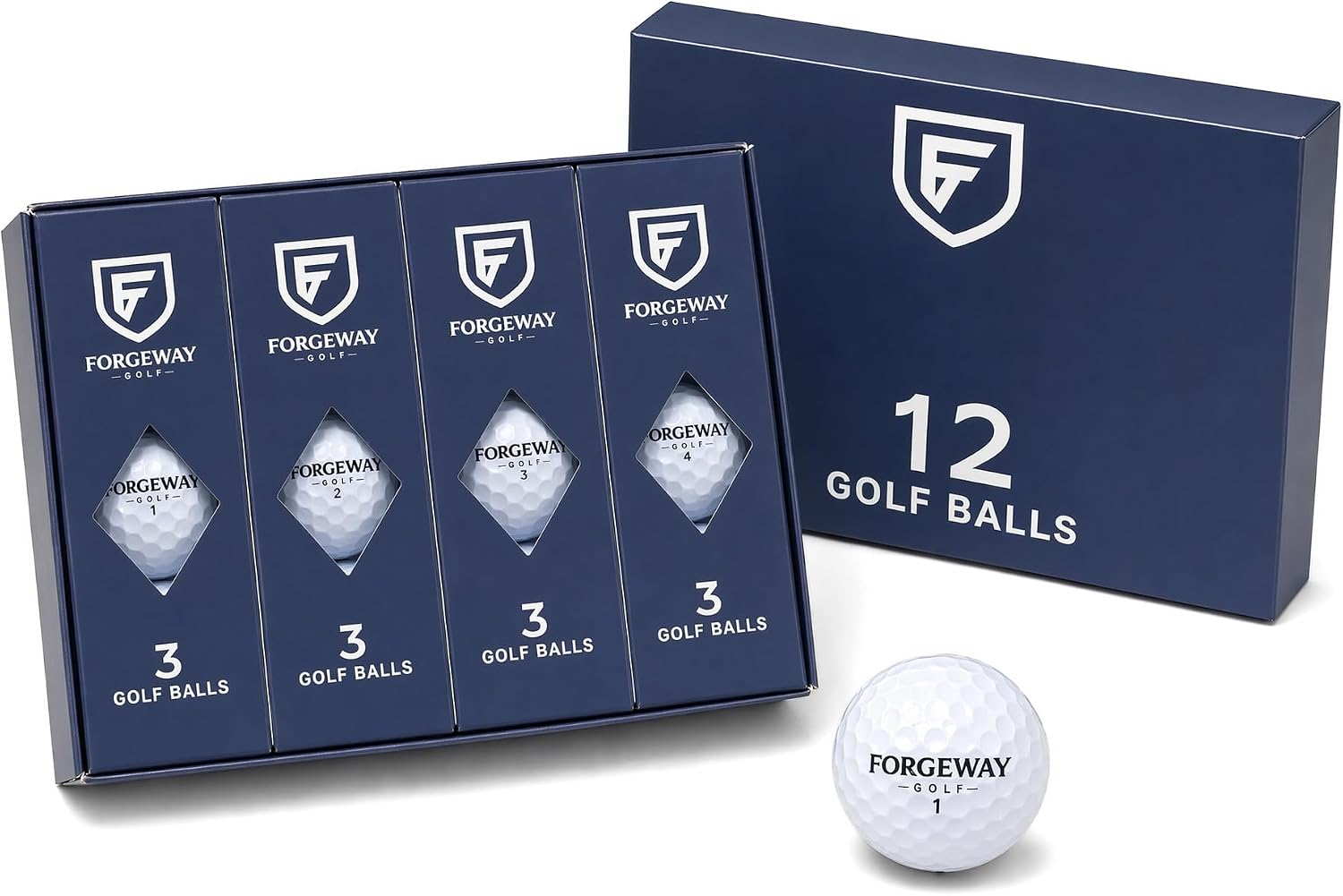
Forgeway Long-Distance Golf Balls Long-Distance, Soft Feel, Low Compression,...
Low compression, soft feel
Price is high for what you get
Prices and availability were captured from Amazon Creators API and may change.
Our pick: TaylorMade SpeedSoft
The SpeedSoft is the ball I keep coming back to. It's a low compression ball, which means it's designed to compress more at impact, giving you more distance on slower swing speeds. My average driver ball speed is 125 mph, which isn't tour level, and this ball flies.
I hit it within 2 yards of my buddy's premium balls off the tee, and it feels significantly softer off the putter face.
The cover held up for three full rounds before I started to see any real scuffing. That's better than I expected from a ball at this price point.
The feel is the selling point. It's soft without being mushy. Off a 7-iron, it feels like the ball is working with you, not fighting you. One buyer in March said, "Switched from a premium ball and lost almost no distance, but gained a ton of feel around the greens." That matches my experience exactly. At $24.97, it's a no-brainer for anyone who wants a soft ball without paying premium prices.
Flaws but not dealbreakers: The SpeedSoft isn't the longest ball off the driver. If you're chasing every last yard, there are firmer balls that will go further. But for most of us, the feel and the consistency are worth the trade-off. If you're a high swing speed player, you might find it spins a bit too much in the wind.
This is for the golfer who wants one ball that does everything well, feels great, and doesn't cost four bucks a ball.
Runner-up: Callaway Supersoft
The Supersoft has been a staple for years, and for good reason. It's a low compression ball that feels incredibly soft, maybe the softest of the bunch. Off the putter, it's almost too soft, but you get used to it.
The distance is solid, though I found it a couple yards shorter than the SpeedSoft off the driver. Where it really shines is around the greens.
It checks up nicely on chip shots and doesn't run out as much as I expected.
The cover is the weak point. After two rounds, I noticed some scuffing on the cover, especially on wedge shots. It's not terrible, but it's not as durable as the SpeedSoft. One reviewer in April noted, "Great feel but the cover marks up pretty quick." That's been my experience too. At $24.97, it's priced the same as the SpeedSoft, so the choice comes down to feel versus durability.
Flaws but not dealbreakers: The scuffing is real, but the ball is still playable. If you're not hitting wedges with a ton of spin, you might not even notice. And the soft feel is worth it for many players. If you're a high handicapper who loses a few balls a round, the scuffing might not even matter before you lose it anyway.
This is for the player who prioritizes feel above everything else and doesn't mind replacing balls a little more often.
Budget pick: TaylorMade Distance+
The Distance+ is the ball I recommend to friends who are just starting out or who lose a lot of balls. At $21.99, it's the cheapest of the bunch, and it delivers solid distance. It's a firmer feel than the SpeedSoft or Supersoft, which means you get more feedback off the face, but it's not harsh. Off the driver, it was actually a few yards longer than the SpeedSoft, which surprised me.
The downside is spin around the greens. This ball doesn't check up much. If you're hitting into firm greens, you'll get a lot of roll out. That's a trade-off you make for the price. It's also not the softest feeling ball on putts, but it's not bad. One buyer in February said, "Great value for the price, flies straight and long, but don't expect much spin on approach shots." That's exactly right.
Flaws but not dealbreakers: The lack of spin is the main issue. If you're a high handicapper who struggles with distance, this ball is a great choice. If you're a low handicapper who needs to hold greens, look elsewhere. The firm feel might also bother players who prefer soft balls, but it's a minor issue at this price.
This is for the golfer who wants maximum distance per dollar and doesn't need a lot of spin around the greens.
B0H5JKFB56
This one is a bit of a puzzle. The listing calls it low compression and soft feel, which is accurate, but the price is $36.99, which puts it in premium territory. I wanted to like it more. The feel is genuinely soft, and the distance is comparable to the SpeedSoft. But I couldn't find a reason to spend $12 more for essentially the same performance.
Visit on Amazon →
The cover held up fine over two rounds, and the ball flies straight. But there's nothing about it that stands out. It's not longer, it's not softer, it's not more durable. It's just more expensive. One buyer in January said, "Good ball, but at this price I'd rather buy the brand name." I agree. The compression is low, so it should work for slower swing speeds, but the value just isn't there.
Flaws but not dealbreakers: The price is the main flaw. If this ball were $25, it would be a strong contender. At $36.99, it's hard to recommend over the SpeedSoft or Supersoft. The performance is fine, but "fine" doesn't justify the premium price tag.
This is for the golfer who wants a soft, low compression ball and doesn't care about the price tag. But if you're budget conscious, skip it.
P*ss Missile Distance
I'm going to be honest, I bought this one for the name. I was expecting a gimmick. It's actually a decent ball. It's a 4-piece design with a Surlyn cover, which is unusual at this price point. The distance off the tee is real, I got some of the longest drives of my testing with this ball. The feel is firmer than the SpeedSoft, but it's not unpleasant.
The problem is the name. I can't recommend a ball to my friends that says "P*ss Missile" on the box. It's a joke ball, and while it performs fine, it's not something I'd put in play for a serious round.
At $35.99, it's also not cheap. If you're looking for a gag gift, sure, but as a serious recommendation, it's hard to take seriously.
One buyer in May said, "Funny name, actually plays well, but I wouldn't use it in a tournament." That sums it up.
Flaws but not dealbreakers: The name is the main flaw. Performance-wise, it's solid, but the branding is a dealbreaker for many. If you don't care about the name, it's a decent ball, but there are better options at this price.
This is for the golfer who wants a laugh and doesn't mind the branding. For everyone else, there are better options.
Premium Urethane
This one is interesting because it's a urethane cover ball at $9.99. That's a great price for a premium cover material, which usually means more spin and better feel around the greens. The ball does spin, that's for sure.
On approach shots, it checks up nicely. But durability is a real concern. After one round, the cover was marked up pretty significantly.
It's not a ball that's going to last more than a couple of rounds.
For a high handicapper who loses balls, this might actually be a smart buy. You get premium spin at a budget price. But if you're playing a full season with the same ball, it's not going to hold up. One buyer in March said, "Great spin, terrible durability.
Lasted one round before it was scuffed up." That matches my experience. At $9.99, you can buy three of these for the price of one premium ball, so it might be worth it for some.
Flaws but not dealbreakers: The durability is the main issue. But at this price, you can afford to replace it often. If you're a low handicapper who values spin over durability, this could be a budget-friendly option. Just don't expect it to last.
This is for the golfer who wants premium spin without the premium price and doesn't mind replacing balls frequently.
The competition
The other balls I considered didn't make the cut. The ball is too expensive for what it offers, and the P*ss Missile, despite its performance, is held back by its branding. The Premium Urethane is a niche pick for players who prioritize spin over durability.
The TaylorMade Distance+ is a solid budget pick, but it lacks the feel of the SpeedSoft. The Callaway Supersoft is a close runner-up, but the scuffing issue pushes it to second place.
When I did the cost-per-day math, the SpeedSoft came out ahead. At $24.97 for a dozen, and with a cover that lasted three rounds, that's about $2 per round if you don't lose it. That's a value proposition that's hard to beat.