I clean my grooves more often than I clean my car. That habit came from six years behind the counter of a big-box golf shop, where I worked as a club fitter and repair tech and watched players spend real money on a new wedge to fix a spin problem that a brush would have solved. Clean grooves are free spin. Dirty grooves are a flier into the desert. So when I sat down to sort out the golf club cleaning essentials worth carrying, I graded every item on one question: does it keep the face clean and the ball dry without falling apart in a bag that lives in a trunk through an Arizona summer?
For most players in 2026, the best setup here is two pieces: the Jiskan Pro brush for the grooves you can reach and the Club Scrub bag for everything else. The SlopeMaster ProGreen Reader is the smart small upgrade for anyone who three-putts from misreads, and the YQXCC cooling towels are a heat problem solver rather than a cleaning tool.
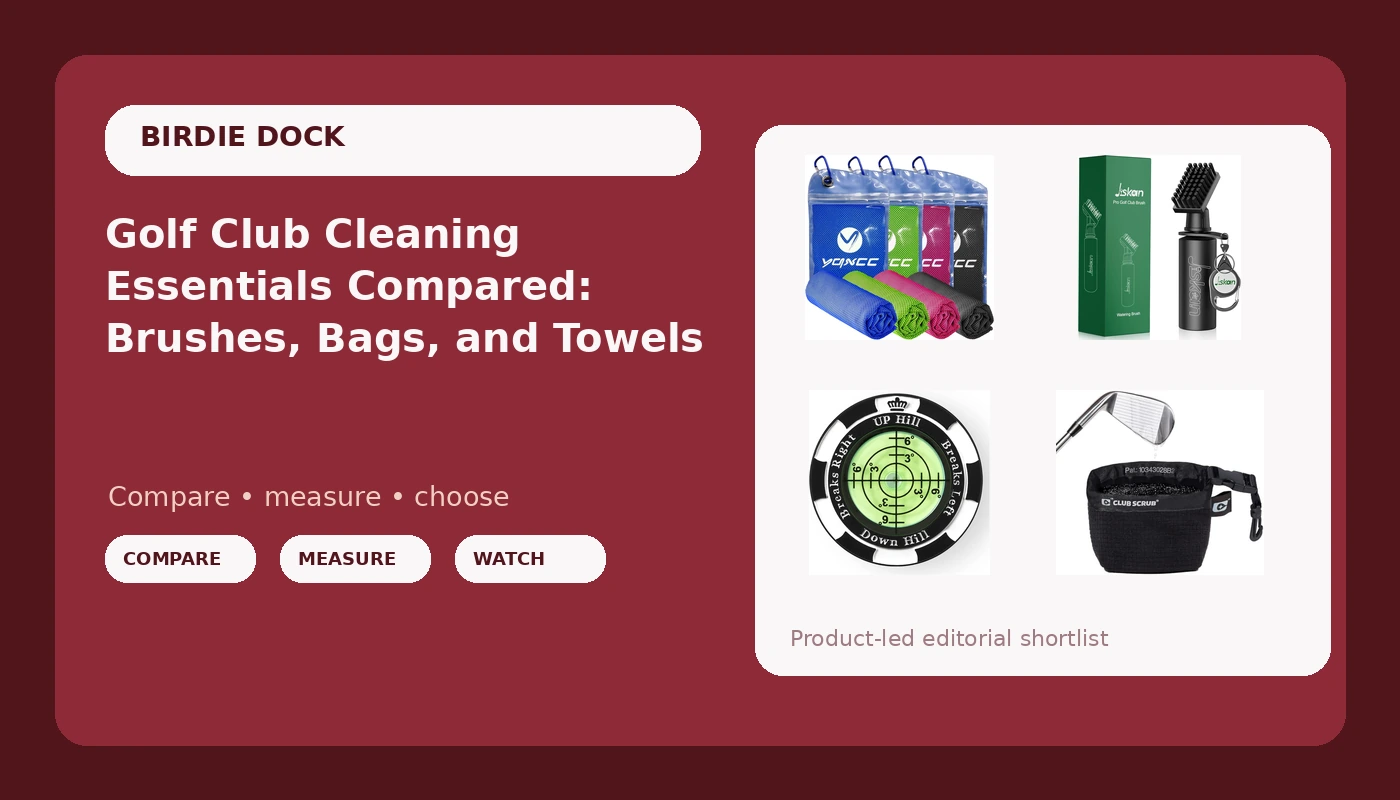
YQXCC 4 Pack Cooling Towels (47"x12"), Ice Cool Towels for Neck & Face
Four towels instead of one, 47 by 12 inches covers neck and face, and a clean one is always available
Does nothing for grooves, and a wet towel forgotten in a bag turns into a science experiment
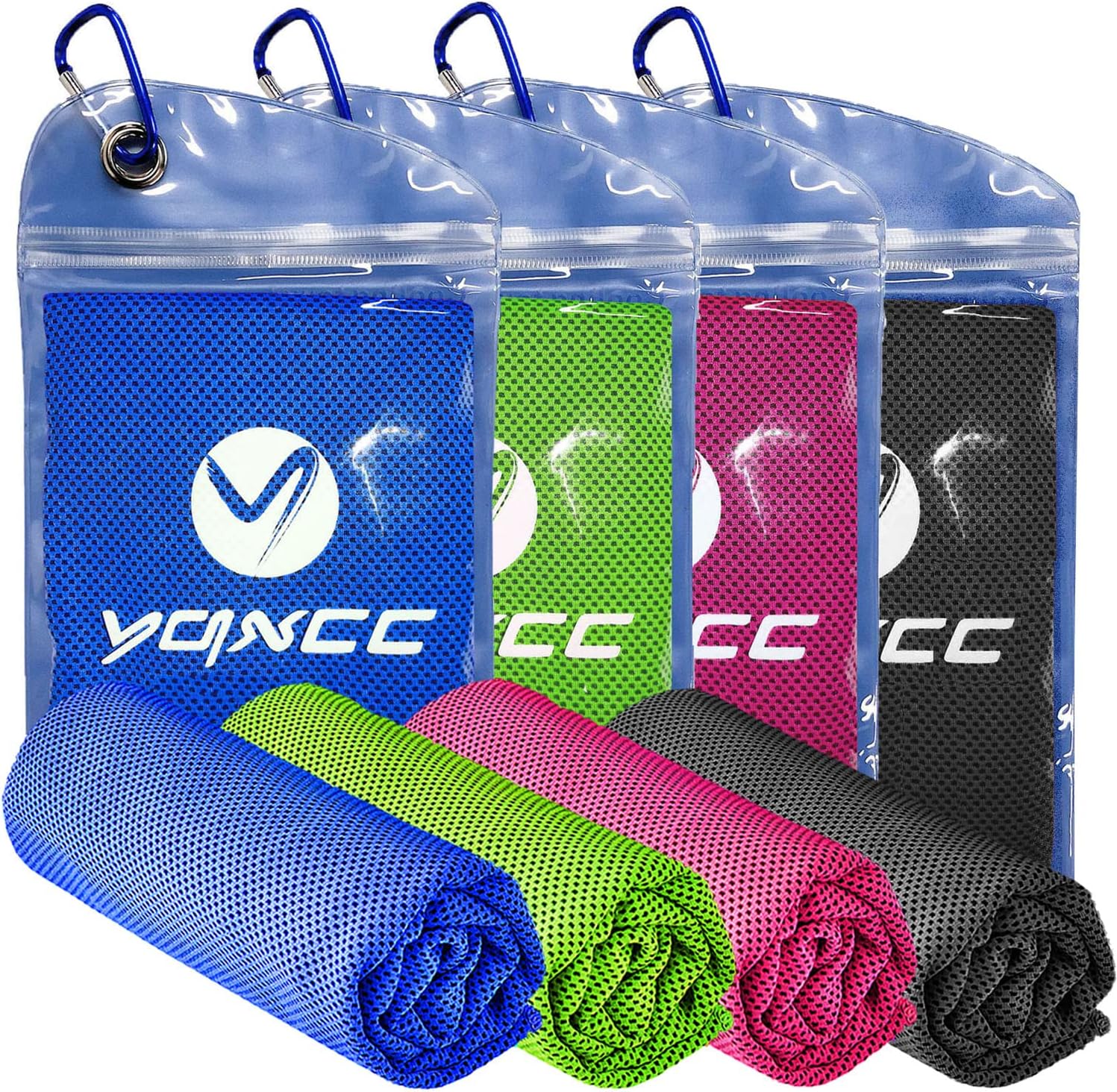
Jiskan Pro Golf Club Brush Cleaner with Retainer Clip and Squeeze Water Bottle 7.5 Inches Holds 4 Ounces of Water, Essentials Golf Accessories for Men, Best Golf Gifts for Men
Built-in squeeze bottle puts water exactly where the dirt is, angled head reaches the groove floor, retainer clip keeps it on the bag
Four ounces runs out fast, and the attachment point is the part I trust least on any brush
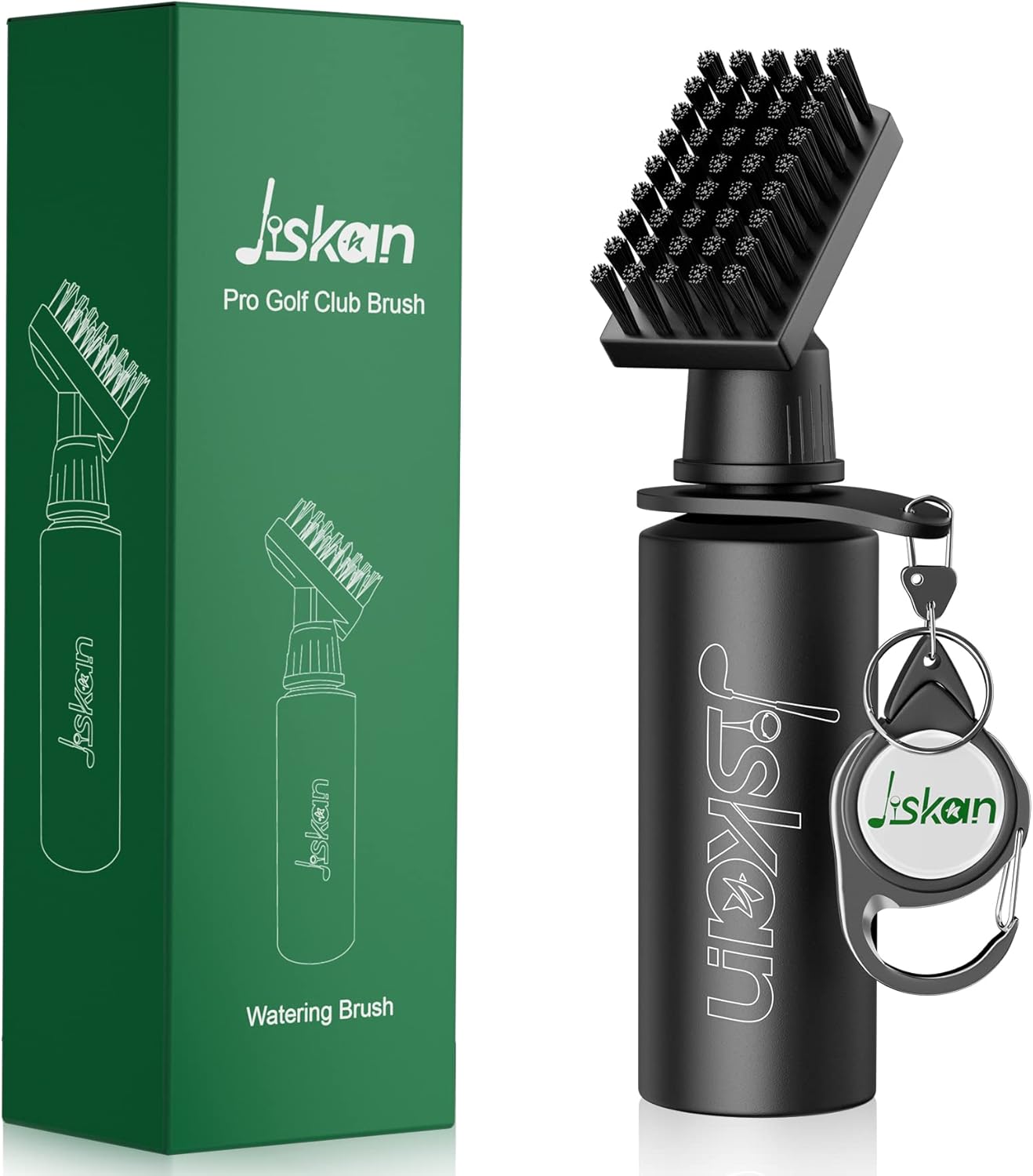
SlopeMaster ProGreen Reader - Golf Ball Marker with High Precision Green Reading Aid Golf Accessories for Men Women
Marker and green-reading aid in one, pocket sized, no battery and no app to babysit
It confirms a read, it does not create one, and it cannot tell you how hard to hit the putt
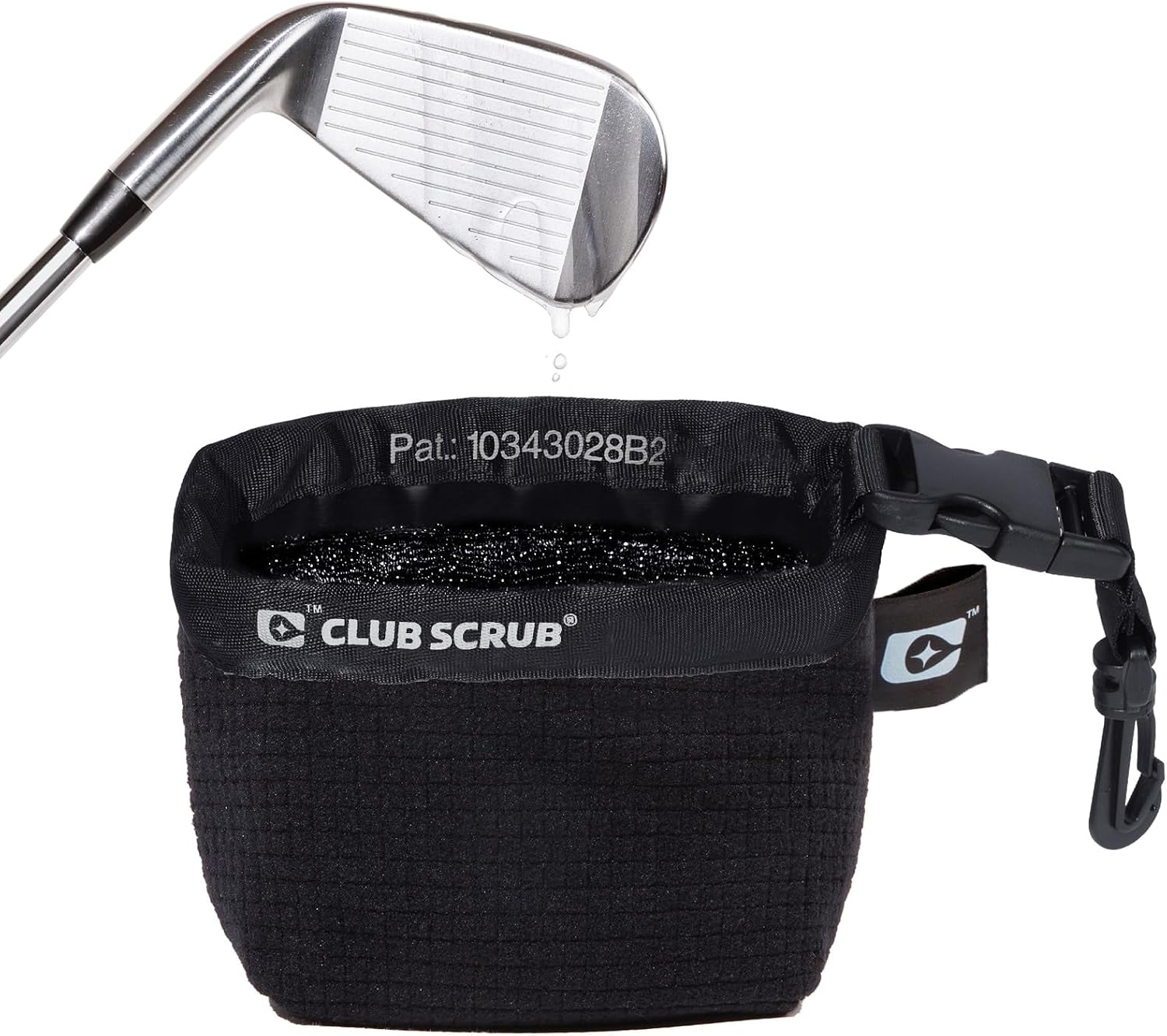
Club Scrub Golf Club and Golf Ball Cleaning Bag, Waterproof Clean Face Technology Liner, Detachable Clip, Machine Washable, Cleans Club Grooves, Dry Exterior
One tool for clubs and balls, waterproof liner keeps the wet side wet, machine washable, detachable clip
Bulkier than a towel, and it needs somewhere to hang on the bag
Prices and availability were captured from Amazon Creators API and may change.
How I grade cleaning gear
I count months owned, not day-one impressions. A tool that works great for a week and then quits is a tool you rented. So four things have to check out before anything earns a recommendation from me: what it actually cleans, what breaks first, what it costs to fix or replace the broken part, and whether it survives heat, grit, and being thrown in a trunk next to a bag of range balls.
Grooves are the whole point of this category. A wedge with dirt packed into the channel cannot grab the ball, and no amount of technique fixes that. Tour players worry about groove rules. A guy shooting in the low 90s should worry about something simpler: clean grooves spin, dirty grooves slide. That is the entire argument for carrying a brush.
The other thing I check is attachment. Anything that rides on a bag gets snagged, dropped, and yanked on. Clips and hard retainers outlive string and lanyards by years in my experience, and a brush sitting in your trunk because the clip broke is a brush you never use. If a product hangs off your bag, the hanging hardware is a spec, not an afterthought.
I also want a cleaning tool that stays clean itself. That sounds like a joke until you smell a wet towel that has been in a bag since June.
Groove brushes: the Jiskan Pro and the water question
The Jiskan Pro brush solves the problem most brushes ignore, which is where the water comes from. It carries a 7.5 inch body with a squeeze bottle that holds four ounces of water, so you wet the bristles and flush the groove instead of spitting on the club face like an animal. If you have ever watched someone spit on a wedge on the first tee, you already understand why this design exists.
The angled head is the second good decision. Groove floors sit at the bottom of a narrow channel, and a straight brush pushes dirt around in that channel instead of lifting it out. An angled head gets the bristles down where the dirt actually lives, which is the difference between a clean face and a face that looks clean until you hit one and watch it knuckle.
The retainer clip is the third. A clip that stays on the bag means the brush is there on the 14th hole when you need it, rather than sitting in the trunk while you wipe your wedge on your shorts.
Where it loses points: four ounces is not much water. You will refill it, probably every round or two in the summer. The reservoir is a convenience, not a hydration system. And the attachment hardware is the part I would watch on any brush, because that is the failure point on every one I have ever carried. If the connector is a soft material rather than a hard clip, treat it as a wear item and plan on replacing it eventually.
Check current Amazon price. For what a brush does for a wedge, that lands in rounding error territory, and it is the highest return cleaning purchase on this list.
The Club Scrub bag: one bag, two jobs
The Club Scrub cleaning bag is the piece that replaces the towel you have been using since 2019. It is built as a bag with a waterproof liner, which means the wet side stays wet and the exterior stays dry, so it does not soak everything else in your bag on a humid morning.
The design covers two jobs. Clubs go in one side to scrub the face and grooves. Balls go in the other to get the sand and mud off before you putt, which is the part most players forget. A muddy ball rolls like a muddy ball, and a dirty ball on a clean face undoes the work you just did.
The liner is machine washable, and that matters more than it sounds. A cleaning tool that becomes disgusting is a cleaning tool you stop using, and then you are back to wiping your irons on your pants. Being able to reset it in the wash extends the life of the product more than any material upgrade.
The detachable clip is the detail I would buy it for. Hang it off the bag, or unclip it and carry it to the ball on a wet day. The neoprene and microfiber options change the behavior: neoprene holds water and stays damp longer, microfiber dries faster and scrubs a little more aggressively. Pick based on your climate, not the color.
Trade-offs are real. It is bulkier than a towel, and if you already carry a wet towel plus a brush, the bag is partly redundant. It is still a bag, so it needs somewhere to hang. And the dry exterior only helps if you actually close it.
Green reading: SlopeMaster ProGreen Reader
The SlopeMaster ProGreen Reader is a ball marker with a green-reading aid built in, which is a smart combination because you already carry a marker. It puts a precision level on your line so you can confirm the tilt you think you see, then mark the ball with it.
My honest take is the same one I give friends who ask: a green reader does not read the green for you. It confirms what your feet already told you. If you cannot feel slope through your shoes, a level will show you which way the green tilts, but it will not tell you how hard to hit the putt, and pace is where most mid-handicap strokes disappear.
The players who get real value from a tool like this are the ones who already read greens reasonably well and want a second opinion on the subtle ones. The four footer that breaks an inch when you swore it was straight. The putt where the tilt contradicts what your eyes see from behind the ball. That is the shot this earns its keep on.
Where it earns its place: no battery, no app, no calibration, and it lives in your pocket with your ball marker. Nothing to charge, nothing to update, nothing to break except the marker itself, and a marker that gets lost is a marker that gets replaced.
Where it loses: it is a skill multiplier, not a skill replacement. Buy it if you misread putts. Skip it if you three-putt because you left the first one five feet short, because that is a speed problem and no level fixes speed.
Cooling towels: the YQXCC 4-pack
The YQXCC cooling towels are the odd item on a cleaning list, so let me explain why they belong. In Scottsdale, a July round is a survival exercise, and a wet towel around the neck is the difference between finishing 18 and quitting at 13. These run 47 by 12 inches, long enough to cover the neck and drape over the face, and they come four to a pack.
Why the four pack matters: cooling towels get gross. They pick up sunscreen, sweat, and course dirt, and you want a clean one for the next round without running laundry on a Tuesday night. Four towels means one in the bag, one in the wash, one in the car, and one that is still clean when you need it.
They also double as a face and hand wipe after you finish cleaning your clubs, which is the only reason they overlap with this category at all. A clean towel for your hands and a dirty towel for your grips should not be the same towel.
The honest trade-off: a cooling towel does absolutely nothing for your grooves. It is heat management, not club maintenance. If you play in a mild climate, this is the item you skip without a second thought. If you play where the cart thermometer reads triple digits, it is the cheapest way to make a round bearable, and it is the item your playing partners will ask to borrow on the back nine.
Cost of ownership: what breaks first
This is where the fitter background shows up. Every piece of gear has a failure point, and the smart buy is usually the one whose failure point is cheap to fix.
- Brushes fail at the attachment. A replaceable clip, or a brush inexpensive enough to replace whole, beats a fancy brush with a proprietary mount every time.
- Bags fail at the liner and the zipper. A machine washable liner resets the clock. A liner you cannot wash means you replace the whole bag once it gets foul.
- Markers and green readers fail by getting lost. There is no repair path, which is an argument for a marker you can afford to lose.
- Towels fail by getting disgusting, which is why multipacks beat one premium towel. You will not wash a single towel often enough to keep it usable.
The pattern in this category: the cheap item and the good item are frequently the same item. That is not true of drivers, and I have watched enough people learn that the hard way. It is very true of brushes, towels, and ball cleaning gear.
The buying order
If you are rebuilding a bag cleaning setup from scratch, here is the order I would go in.
- A brush with a water reservoir. Clean grooves are the highest return thing you can do for your wedges, and it is also the cheapest thing on this list.
- A cleaning bag if you want one tool for clubs and balls and you are tired of wet towels soaking your bag. Get the washable liner.
- A green reader if you misread putts and want a second opinion on the short ones. It is a skill tool, not a magic tool.
- Cooling towels if you play in real heat. Buy the four pack so you always have a clean one.
Skip anything that needs a proprietary refill, a battery, or a phone app. Cleaning gear should work when you pull it out of the bag at 7 a.m. with no charging cable in sight.
What I'm testing next
I keep a durability log on everything I carry, and I update it at week three and month six, because day one impressions are marketing and month six is reality. The next comparison I want to run is bristle stiffness across a full season of Arizona dirt, plus how a waterproof liner holds up after a dozen trips through the wash. When I have months owned instead of days, I will post that update, the same way I do on everything else.
Until then, everything above is graded on design, failure points, and what it actually cleans. That is the same standard I used behind the counter, and it is the reason my bag still has a brush in it and not a fourth wedge.