Cart bags are the least glamorous purchase in golf and the one most likely to outlive three drivers. If you landed here after typing american supply vs ask echo golf gear cart bags into a search bar, you are probably staring at two very different price tiers and wondering whether the cheap one is a scam or the expensive one is a markup exercise. I spent six years behind a golf store counter, and I have watched this exact decision play out at the register a few hundred times: someone walks in for a full cart bag, spots a small caddy bag on the clearance rack, and asks me which one he actually needs.
The honest answer is that they are not the same product, and that is the whole point. One is a home for your clubs. The other is a satchel that holds balls, tees, and a rangefinder while your clubs live somewhere else. Once you see that split, this field sorts itself out fast.
Related: Cart bag vs stand bag: which one belongs on your push cart
The best cart bag for most people in this group is the ASK ECHO T-Lock, because a 14-way full-length divider and a quiet top solve the two things that actually annoy you on a riding cart: club chatter and irons that snag on the way out.
If you want the whole American Supply vs ASK ECHO golf gear cart bags question answered in one sentence, it is this: buy the American Supply caddy as an add-on, not as a replacement, and buy the ASK ECHO when you need the bag itself.
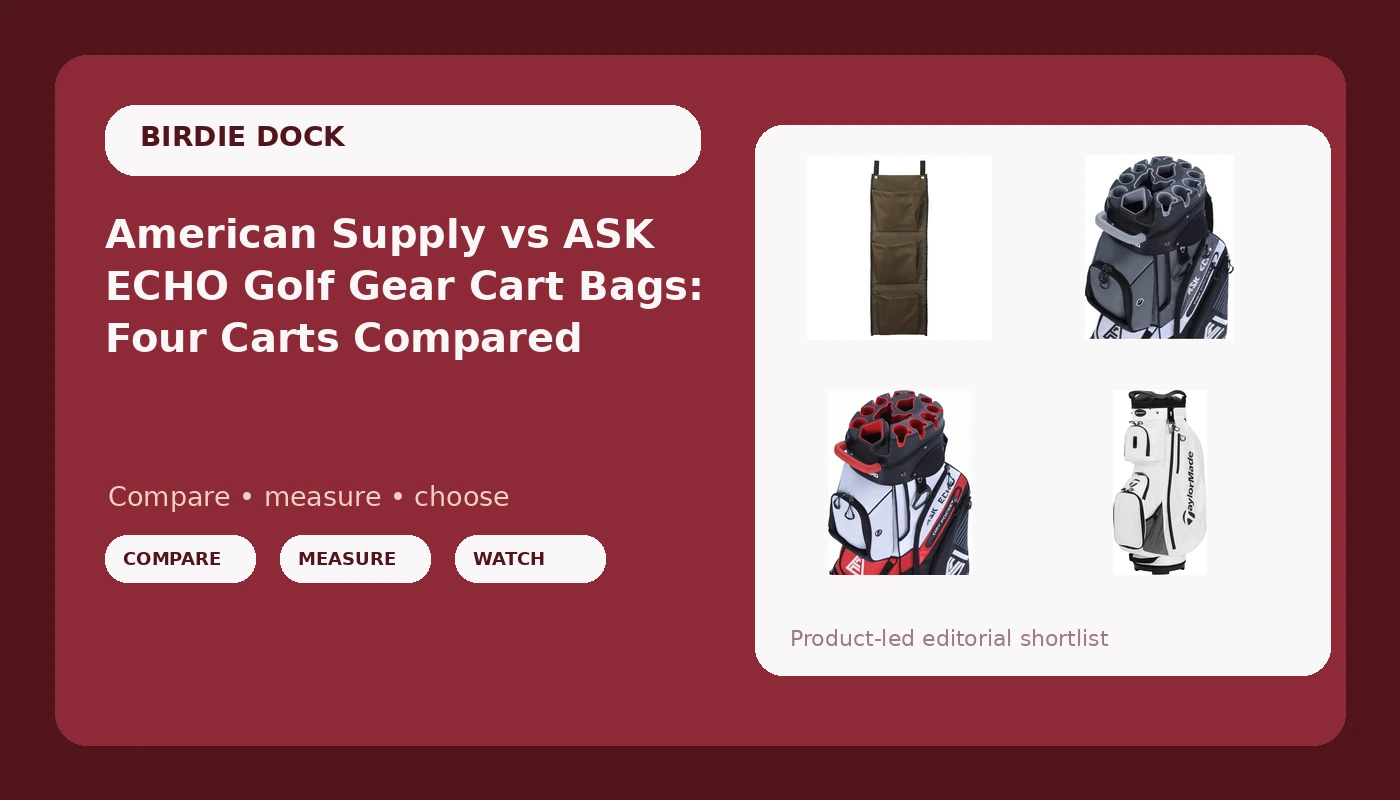
American Supply 3 Pockets Cart Caddy Bag Color Brown
Cheapest way to keep balls, tees, and a rangefinder in one place, and brown hides cart scuff
Three pockets and no divider means it is not a club bag in any sense
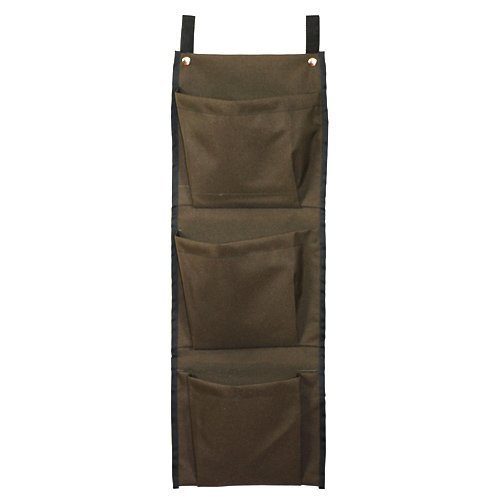
ASK ECHO T-Lock Golf Cart Bag, Quiet 14-Way Full-Length Divider
14-way full-length divider plus a quiet top, which is the spec that changes your round
Small brand, so a failed zipper in year three is a marketplace problem, not a repair desk
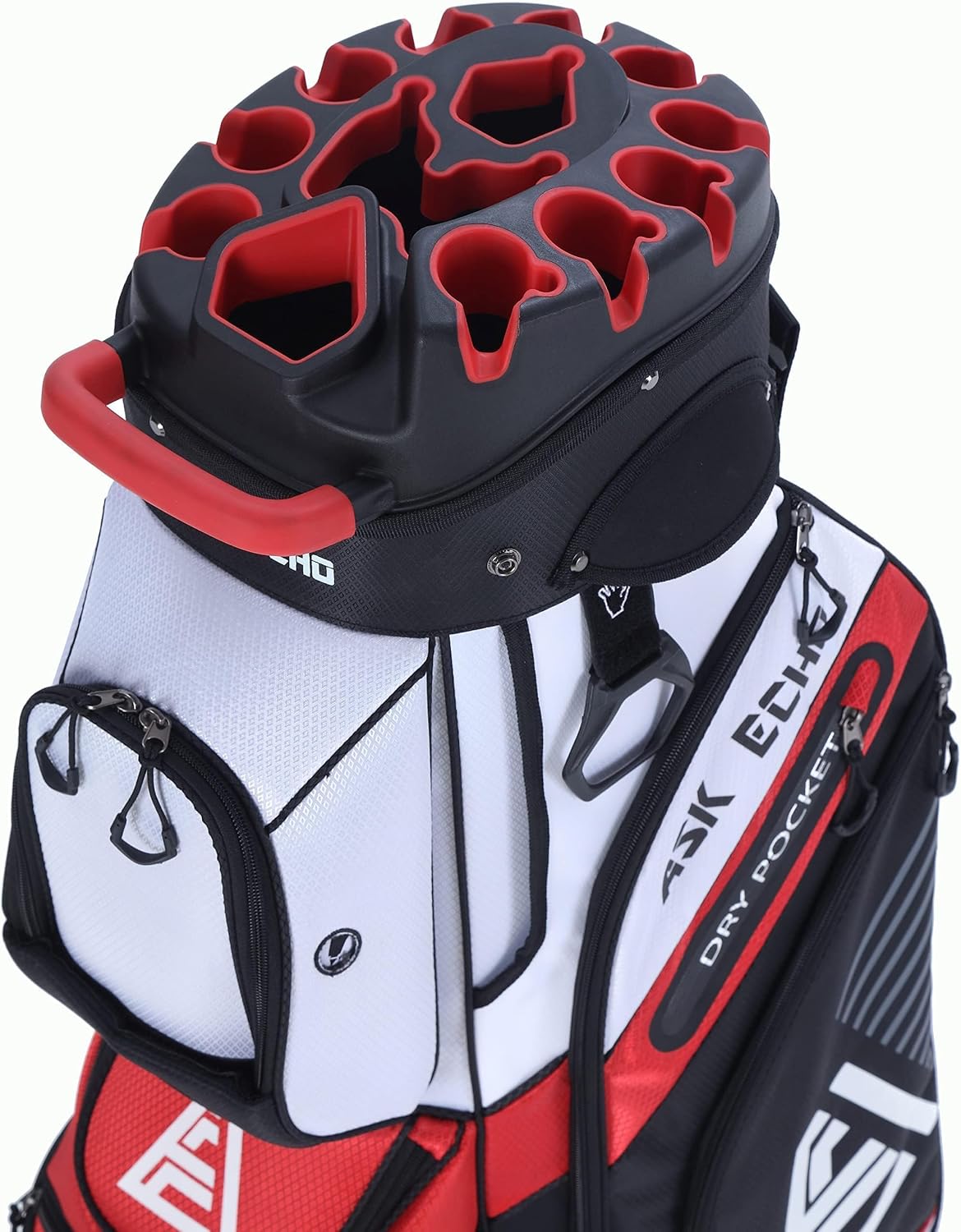
ASK ECHO T-Lock Golf Cart Bag, Quiet 14-Way Full-Length Divider
Same T-Lock build as the other listing, so take whichever variant is actually in stock
Duplicate listing makes price comparison annoying, and colors get mixed up at checkout
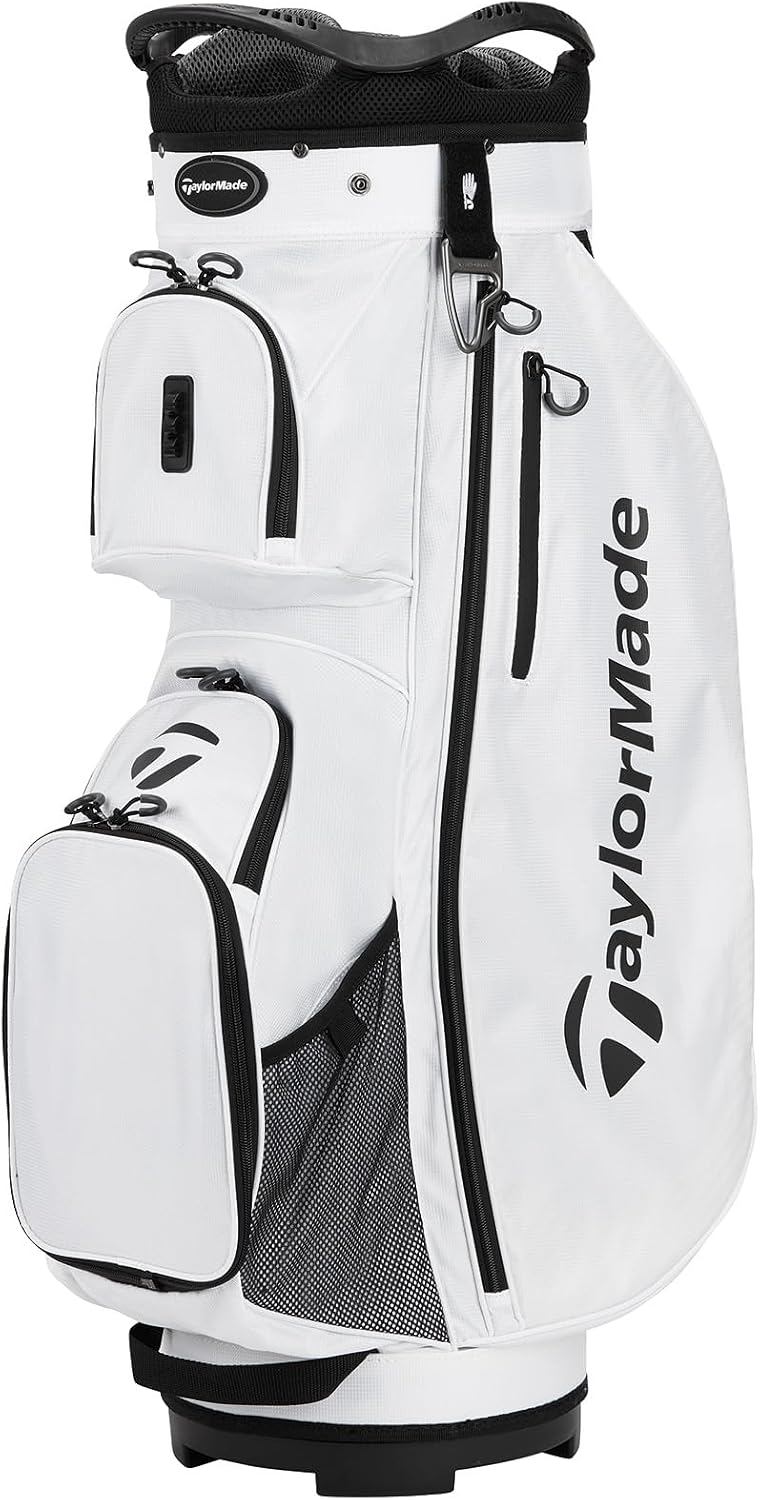
Taylormade Golf Pro Cart Bag
Brand service network, warranty handling, and resale value if you flip it in two years
Most of the premium is badge, not a job the cheaper bag cannot do
Prices and availability were captured from Amazon Creators API and may change.
How I judge a cart bag without hitting a shot
Cart bags are one of the few golf purchases you can grade almost entirely from the spec sheet, because nothing about them affects ball flight. What matters is boring: does each club get its own slot, does the top hold its shape when the bag is strapped down, can you reach the pocket you need while the bag is on the cart, and what breaks first. After enough seasons of watching zippers fail and dividers collapse, I keep a short list.
Divider count is the first filter. A 14-way top gives every club a home, which matters less for neatness than for grip wear. Clubs that share a slot rub against each other for 18 holes, and grips are the cheapest thing on the bag to replace but the most annoying to replace every season. Full-length dividers are the second half of that: a partial divider looks identical at the top and lets irons tangle at the bottom. If a listing will not say full-length, assume it is not.
The top material decides whether the bag is quiet. On a riding cart, every bump sends the heads into each other. A soft, separated top cuts that down to almost nothing, and a hard, undivided top turns a bumpy fairway into a percussion section. "Quiet" in a product name is marketing until the divider design backs it up, which is why I read the divider spec before I read the word quiet.
Then there is cart fit. A cart bag needs a flat back or a strap tunnel so it sits still, and pockets that open away from the cart frame instead of into it. This is where inexpensive bags fall apart, sometimes literally: a pocket you cannot open while the bag is strapped down is a pocket you stop using.
Last, cost of ownership. Zippers, hardware, and the base are what fail. A bag is a five-year purchase for most players, so a brand with a service line and replaceable parts is worth something. That is the only place Taylormade earns part of its premium, and I will get to it.
The American Supply caddy: three pockets and no pretense
Read the name of the American Supply product carefully, because it tells you exactly what you are getting: a cart caddy bag with three pockets in brown. It is not pretending to hold fourteen clubs in individual slots. It is a small, soft-sided bag that rides along and keeps the loose stuff together.
That is a genuinely useful thing to own. My cart routine for years has been a rangefinder in one pocket, a sleeve of balls in another, tees and a pitch-mark tool in a third, and a towel clipped to something. A caddy bag formalizes that instead of making you dig through the main bag's valuables pocket while the group behind you waits.
Three pockets is the right number for that job and not one more. More pockets on a small caddy means more places to lose a ball marker and more seams to fail. Brown is a practical color on a golf cart for the same reason it is practical on a work boot: it hides the scuffs that come from being shoved into a cart basket or set down on a path.
What it will not do is replace a cart bag. No divider means no club separation, no meaningful structure, and nothing holding a full set upright on a cart. If your current bag is a stand bag that lives in the trunk, the American Supply caddy is a cheap upgrade to your organization. If you do not own a cart bag at all, buying this first solves nothing and you will end up buying the real bag anyway.
The other thing to weigh is durability. Seams and zippers are where small, inexpensive bags fail, and I would expect the fabric to outlast the hardware. That is less a knock on this specific product than a pattern in this price class: buy it for the job it does, do not overload it, and check the stitching at the strap attachment point once a season.
ASK ECHO T-Lock: a quiet 14-way top and one bag for one job
The ASK ECHO T-Lock is the first bag in this group that is actually built for a riding cart. The name gives you the two specs that matter: a 14-way top with full-length dividers, and a design meant to keep the bag quiet while it sits on a cart.
Fourteen full-length dividers means every club, driver through lob wedge, has its own column from the top of the bag to the bottom. In practice that does three things. Grips stop wearing against each other. You stop dragging three irons out when you wanted one. And the bag keeps its shape instead of collapsing into a sack once the cart straps tighten.
The quiet part is why I would take this over a generic 14-way bag. On a riding cart, clubs do not rattle because the bag is bad, they rattle because the top lets the heads touch. A top that separates and cushions the heads turns an annoying round into a normal one, and if you have played 18 holes next to someone whose irons click on every bump, you know what that is worth. Quiet is not a luxury feature here. It is the feature.
You will notice two listings for the same T-Lock model in the table. That is a variant issue, not a product issue: same bag, different colorway or seller. Check which one you are ordering before you check out, and do not pay a premium for whichever happens to be ranked higher on a given day. Between the two, take the one that shows stock and ships from the manufacturer.
Where I would push back on this bag is support. ASK ECHO is not a brand with a tour van, and if a zipper pull gives out in year three you are likely dealing with a marketplace return window rather than a repair desk. That is the trade you make for full-length separation without paying for a badge. Inspect the zippers when it arrives, use the pockets the way they are designed instead of stuffing them, and it should hold up.
Taylormade Pro Cart Bag: what the badge actually buys
The Taylormade Pro Cart Bag is the premium option here, and I want to be fair to it before I tell you it is probably not the bag most readers should buy. Buying from a company that size gets you a few real things: a customer service line that exists, warranty handling that does not depend on a marketplace seller answering a message, and resale value if you flip the bag in two years. It also gets you a design team that has iterated on cart bags for a long time, and that shows up in small places like strap routing and pocket placement.
What it does not get you is a fundamentally different job. A cart bag holds clubs on a cart. Every bag in this article that does that job competes on the same handful of variables: divider separation, top quiet, pocket access, cart fit, and durability. Premium money buys refinement of those variables, not new ones. My test for any premium claim is simple. Name the thing it does that the cheaper option cannot. If the answer is "it looks better" or "it is a Taylormade," you are paying for the badge, and there is nothing wrong with that as long as you know it going in.
Where a premium bag genuinely earns its price is the long tail. Seams that do not fray, zippers that still run smooth in year five, a base that does not wear through from being set down on pavement. Those are unglamorous and they are the whole difference between a bag you keep and a bag you replace. If you play three times a week and you keep bags for a decade, that math can work in your favor.
For everyone else, the honest framing is that the Taylormade makes the most sense for the player who wants to buy once, likes buying from a brand with a phone number, and does not want to think about this purchase again. That is a legitimate way to buy golf gear. It is just not the cheap way, and this site is not going to pretend otherwise.
What american supply vs ask echo golf gear cart bags really comes down to
The comparison sounds lopsided until you notice these two brands are not selling the same object. American Supply is selling a three-pocket cart caddy. ASK ECHO is selling a 14-way cart bag. Reading american supply vs ask echo golf gear cart bags as a straight head-to-head is the wrong frame, and it is why shoppers end up disappointed with both.
Frame it as a stack instead. The bag is the foundation, and the caddy is the organizer that sits on top of it. If you are starting from nothing, the bag comes first, and the T-Lock is the one I would buy, because a 14-way full-length top with a quiet design is the spec that changes your round. If you already own a cart bag you like and your problem is that balls, tees, and a rangefinder are loose in the pockets, the American Supply caddy solves that for less than the cost of a dozen premium balls, and it solves it without touching the bag you already trust.
There is also a middle path people forget. Buy the T-Lock and a cheap caddy, and you have a full cart setup for less than the premium bag. The only things you give up are the bigger brand's service network and whatever refinement it brings to pocket layout. For a golfer who plays twice a month, that is a trade I would make every time, and it is the same advice I gave at the counter for six years: spend on the thing that touches the ball, save on the thing that holds it.
The failure mode to avoid is buying the caddy to fix a bag problem. If your clubs are tangled, hard to pull, and loud on the cart, a three-pocket bag does nothing about it. Fix the bag first, then accessorize.
Which one for which golfer
- You ride a cart every round and your irons click together: ASK ECHO T-Lock, either listing. The 14-way full-length divider is the fix, and the quiet top is the bonus.
- You already like your bag but your pockets are chaos: American Supply caddy, in brown, and stop digging past the valuables pocket while the group behind you waits.
- You want to buy once from a brand with a service line and you keep bags for years: Taylormade Pro Cart Bag. Pay the premium knowingly.
- You are building a first setup on a budget: T-Lock plus the caddy, in that order, and skip the premium bag entirely.
Two habits matter more than the bag you pick. Check the zippers and the strap attachment points when the bag arrives, because that is where every cart bag fails first. And empty the pockets at the end of the season so the seams are not carrying a year of tees, old scorecards, and a sleeve of balls you forgot about. Both are free and both add years.
What I am watching next
I keep a durability log on everything I use, and cart bags are the easiest thing on that list to grade honestly because nothing about them fails fast. The failure points are predictable: zipper pulls, seam stress at the strap tunnel, and the base. I want to know which of these bags still has smooth zippers after two full seasons of desert golf, where dust gets into hardware and never comes back out.
Until then, the recommendation stands as written. The ASK ECHO T-Lock is the bag, the American Supply caddy is the add-on, and the Taylormade is the buy-once option for someone who values the badge and the service line enough to pay for them. If your clubs are ready for a bag that keeps them apart and keeps them quiet, the T-Lock is the one to check.