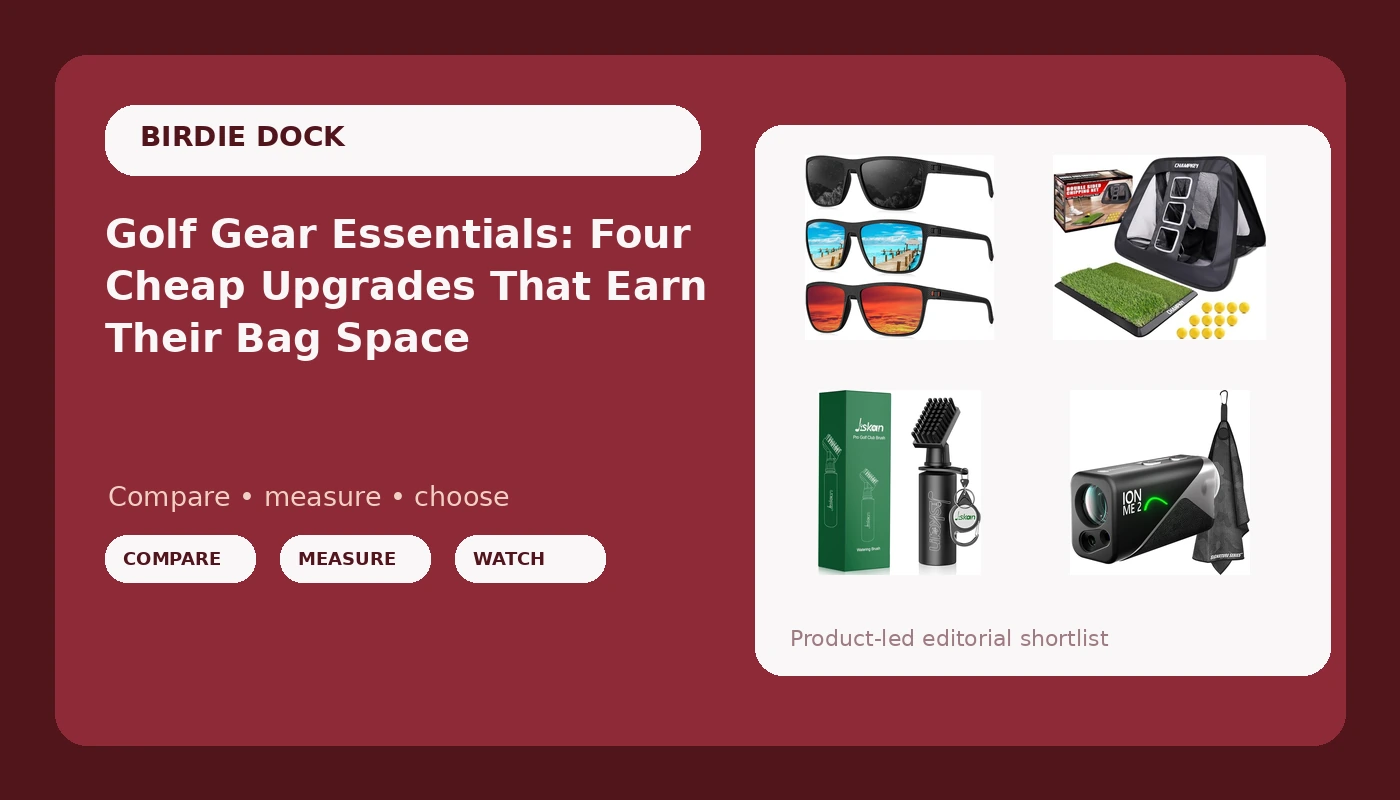
Related: Best Golf Practice Nets for Backyard Sessions
I spent six years behind the counter of a big box golf store, fitting clubs and fixing them, and the lesson that stuck had nothing to do with launch monitor numbers. It was the markup math. The driver on the wall cost the store a fraction of its sticker, and the small stuff by the register carried some of the fattest margins in the building. That is not a reason to skip golf gear essentials. It is a reason to buy them the way a fitter would: work out what the item actually does, then decide what that is worth to you.
Every bag has four jobs that need doing. You need a number you can trust. You need clean grooves. You need to see the ball. And you need somewhere to practice that is not a bucket at the range. Those are the four categories below, one product in each: a rangefinder, a groove brush, a pair of sunglasses, and a chipping net. None of them will fix a slice. All four will make the rounds you already play easier to manage.
Here is how each one earns its spot, and what I would check before spending.
Best Overall: Mileseey IONME 2 Mini Golf Rangefinder
A rangefinder is the one item in this list that changes how you play rather than how you look. Pacing off sprinkler heads works right up until you land on a course with no markers, and then you are guessing at the number that decides your club. The Mileseey IONME 2 Mini lists a 1,100 yard range, 6X magnification, slope compensation, and a tournament mode that shuts the slope function off so the unit stays compliant where that rule applies. It is IP65 waterproof, and it comes with a magnetic mount and the Signature Series bundle.
The specs I read first on any rangefinder are not the range number. They are these:
- Pin lock feedback. Vibration when it grabs the flag is the feature that matters. A long range claim means nothing if the unit hunts around the flag while you stand there.
- The slope switch. An external, physical switch beats a menu setting. You want to be able to make it tournament legal in two seconds, not five taps deep in a settings screen.
- The mount. A magnetic mount is worth more than it sounds. It sticks to the cart frame, so you stop setting the unit on the seat where it slides off at the first bump.
- Waterproofing. IP65 is a real rating, not marketing filler. Morning dew and a wet cart path are normal conditions, not abuse.
The tradeoff with any mini body is steadiness. Smaller units are easier to carry and harder to hold still, so if your hands shake after a long round, brace your elbows against the cart before you press the button. And "Ball-to-Pin" naming aside, what you are buying is a distance to the flag, so confirm the lock behavior on the pins at your home course.
Best Value: Jiskan Pro Golf Club Brush Cleaner
Clean grooves are free spin. A wedge that is packed with dirt and sand cannot bite, and no amount of new club technology fixes a groove that is full of the last bunker you were in. The Jiskan Pro is the design I keep coming back to: a 7.5 inch body, a squeeze water bottle that holds 4 ounces, and a retainer clip that keeps the whole thing on your bag instead of in the cart basket.
What I like about the squeeze bottle layout is that you are not spitting on your club face like an animal. You squeeze, you scrub, you wipe, and the face is clean enough to actually spin the ball. The dual sided head gets into the groove without scratching the chrome, and the size is right for a bag pocket.
The caveat is the same caveat I have for every accessory that hangs off a bag: the clip and lanyard are the first thing to fail. It is a small piece of hardware carrying the whole product, and it takes more abuse than anything else in your bag. If you like the design, this is the rare case where buying a second one is not hoarding, it is planning ahead. Buy the product for the brush, and keep an eye on the attachment point.
Best Everyday Pick: KALIYADI Polarized Sunglasses
Sunglasses are the most overlooked item in golf gear. You are outside for four hours, squinting into a ball flight, and then wondering why your head hurts on the back nine. The KALIYADI pair is polarized, lightweight, and rated for UV protection, and the listing covers driving, fishing, and golf, which tells you the tint is built for bright, flat light rather than fashion.
The honest note on polarized lenses: they cut glare off water and cart windshields beautifully, and some players find they flatten the contours when reading a green. If you are one of those players, wear them for the round and push them up on the green. That is a preference, not a flaw, and it is why a lightweight frame matters. A pair you forget you are wearing is a pair you will actually keep on.
Fit is the other thing. Golf is a lot of bending over to read putts and pick up a ball out of the cup, and sunglasses that slide down your nose during a round get left in the cart by the third hole. Check that the temples grip without pinching, and check them in the mirror while you tilt your head down. If they hold there, they will hold all day.
Best Practice Tool: CHAMPKEY Double-Sided Golf Chipping Net
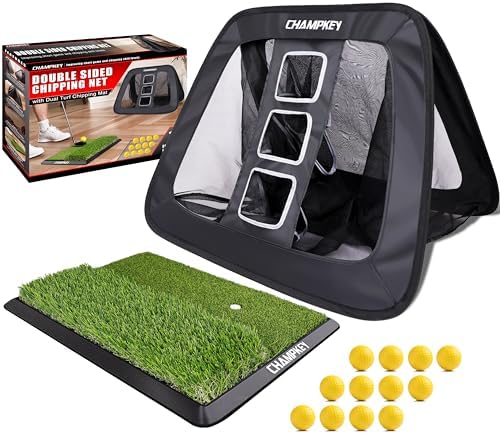
The CHAMPKEY chipping net is the one item here that pays for itself fastest, because a small bucket at the range costs real money and this does not. It is double sided, which gives you two target windows, and it ships with a mat and 12 foam balls. That is a complete practice setup for a garage, a driveway, or a backyard.
Set your expectations correctly, though. Foam balls mean this is a technique tool, not a durability test. You are training contact, trajectory, and the feeling of a chip that lands where you aimed. You are not measuring ball speed or checking whether a net survives a full speed driver, and anyone who tells you a foam ball net doubles as a full swing net is selling you something.
What to check before you buy: the frame joints, because a chipping net lives or dies on whether the poles stay seated after a hundred reps. The mat, because a mat that slides across a garage floor teaches you nothing about contact. And the anchoring, because the net needs to stay put when the ball hits it. Set it up once, tug on every joint, and if anything feels loose, tighten it before the first swing rather than after the tenth.
The golf gear essentials reference table
This is the short version, and it is the table I would keep on my phone while shopping. Each row is one job your bag needs done, the product that does it, and the specific thing to check before you click buy.
| Gear | What it solves | Where it lives | What to check |
|---|---|---|---|
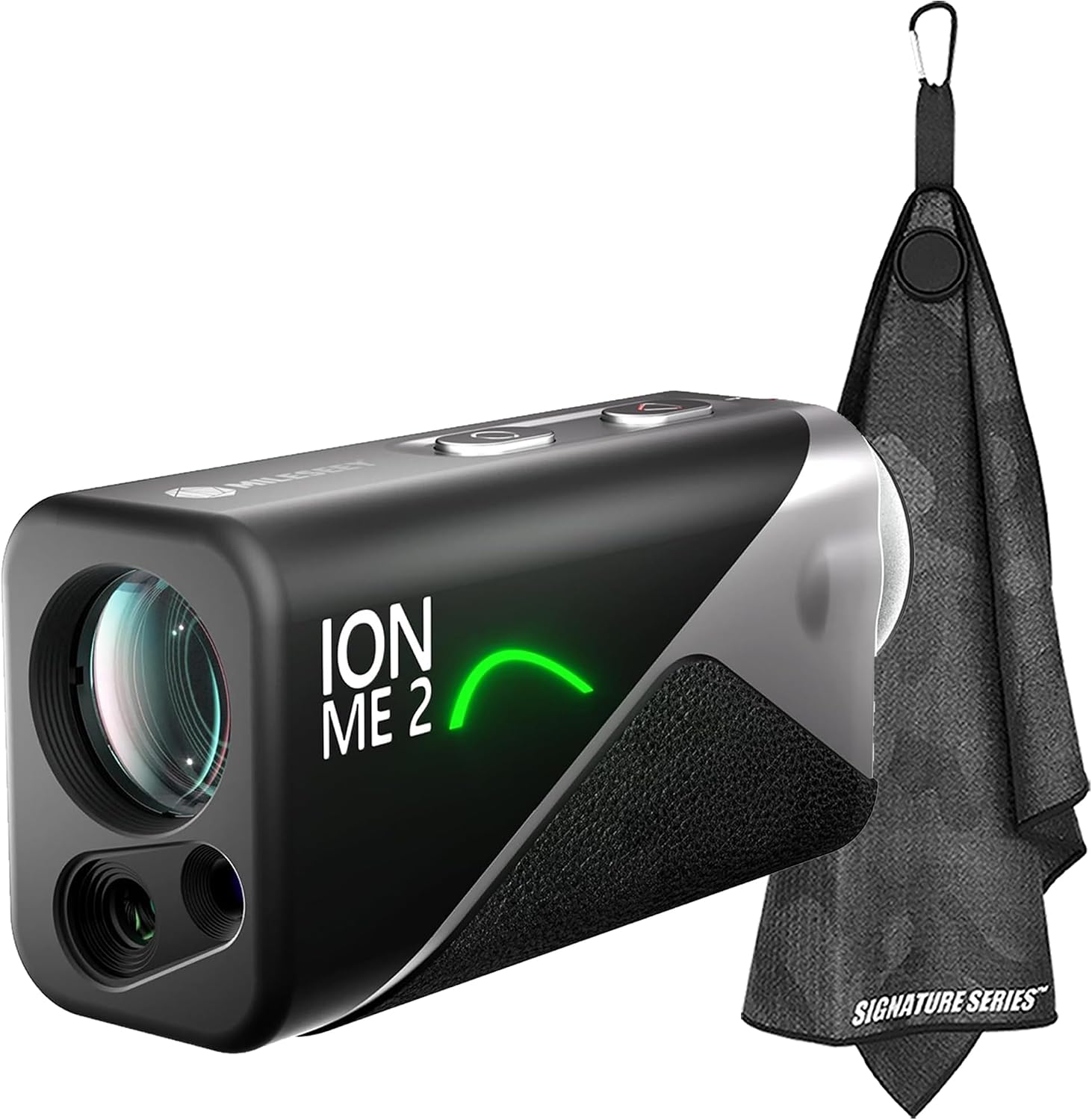 Visit on Amazon → Mileseey IONME 2 Mini Golf Rangefinder |
Yardage you can trust on courses with no markers | Cart frame or pocket | Pin lock speed, slope switch, magnetic mount, IP65 seal |
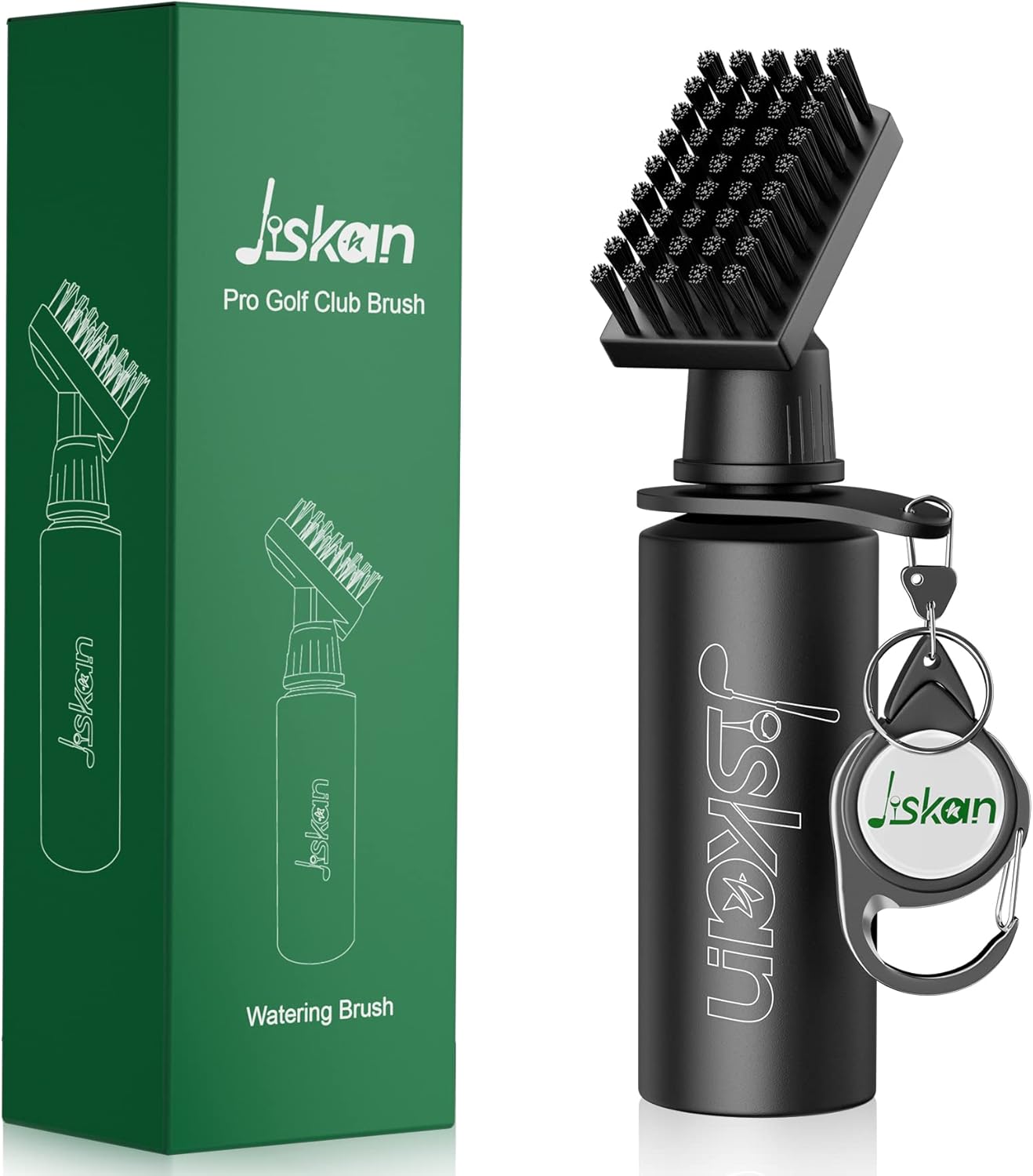 Visit on Amazon → Jiskan Pro Golf Club Brush Cleaner |
Mud and sand packed into your grooves | Bag pocket, clipped to the outside | Clip and lanyard, reservoir seal, bristle condition |
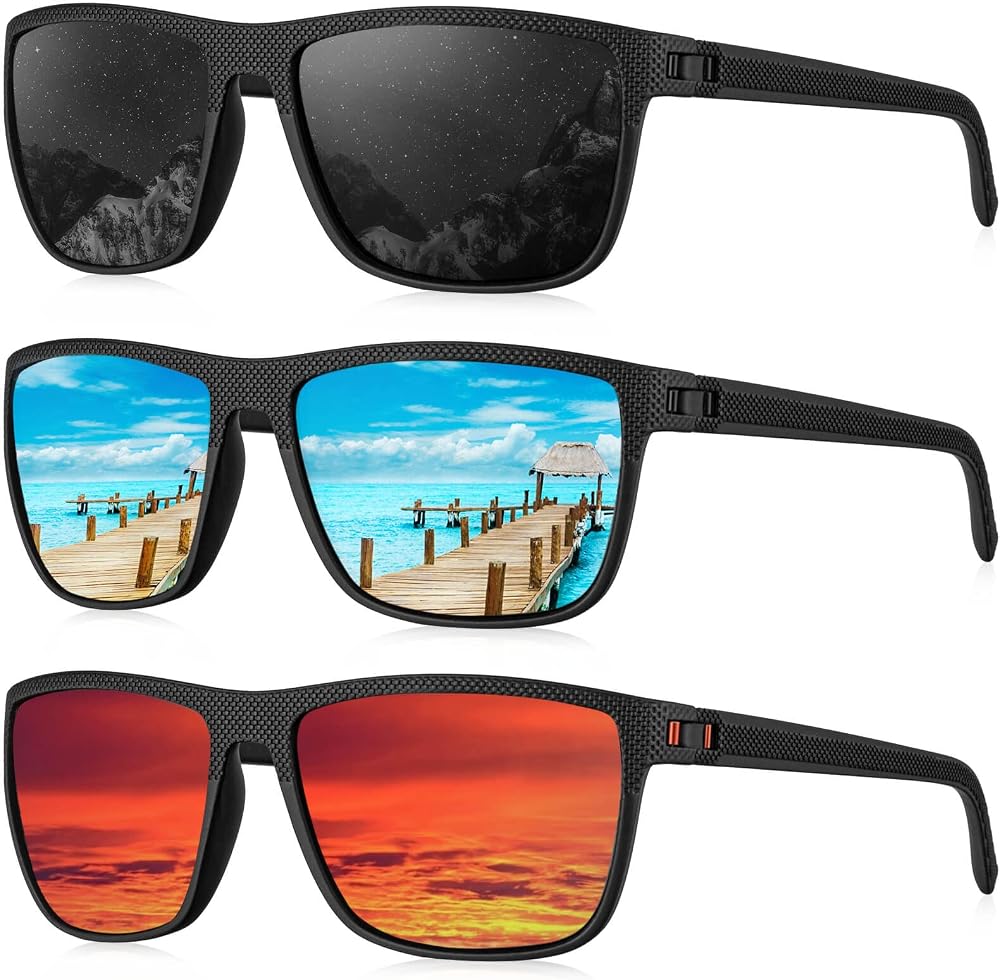 Visit on Amazon → KALIYADI Polarized Sunglasses |
Glare and squinting for four hours straight | On your face, spare pair in the bag | Fit when you tilt your head down, tint, temple grip |
 Visit on Amazon → CHAMPKEY Double-Sided Golf Chipping Net |
Somewhere to hit chips without buying a bucket | Garage, driveway, backyard | Frame joints, mat grip, netting anchors |
How I evaluate golf gear
I do not start with the spec sheet, because the spec sheet is written by the people selling the product. I start with four questions, and anything that fails one of them does not make it into a recommendation.
- What does it do that the cheap option does not? If the answer is "looks nicer," that is not an answer. Premium gear has to beat the value pick on something measurable: accuracy, durability, fit, or a feature the cheap one genuinely lacks.
- Will it survive a season in the bag? A golf bag is a hostile place. Things get dropped, sat on, rained on, and shoved into a trunk at 100 degrees. Gear that only works on day one is not gear, it is a rental.
- What breaks first, and can I fix it? Every product has a failure point. On a brush it is the clip. On a net it is the frame joints. On sunglasses it is the hinge. Knowing the weak spot tells you whether a product is repairable or disposable.
- Would I still recommend it after six months? This is the question that kills most of my enthusiasm. First impressions are generous. Long term ownership is honest.
What the specs actually tell you
Range claims are the easiest number to inflate and the least useful one to compare. A 1,100 yard range on the Mileseey does not mean you will be lasering greens from the next fairway over. It means the unit has headroom, and headroom on a rangefinder is mostly about how confidently it locks a flag at the distances you actually play, which is 150 and 250 yards on the courses most of us see.
Durability is the spec nobody prints. Nobody puts "this clip will last two years of heavy use" on a box, and nobody advertises the frame joint that loosens after a season. That is exactly why I read owner reviews at the six month mark instead of the one week mark. Marketing tells you what a product does on day one. Owners tell you what it does on day 200.
And markup is real in every category here. Accessories carry the fattest margins in a golf shop, which is why the same basic brush design ranges from a few dollars to twenty depending on the logo. That is not a knock on the expensive version. It is a reminder to ask what the extra money buys you, and to be satisfied with the answer before you pay it.
Should you buy the Mileseey IONME 2 Mini Golf Rangefinder?
If you play courses without markers, yes. Slope compensation, a tournament mode that turns it off, IP65 waterproofing, a magnetic mount, and 6X magnification cover the jobs a rangefinder actually has. Check the current Amazon price, then compare it to a month of range balls, because that is the real tradeoff for most players. The one thing I would confirm in reviews is pin lock behavior, since that is the feature you use on every single hole.
Should you buy the Jiskan Pro Golf Club Brush Cleaner?
Yes, and consider a spare. A squeeze bottle that holds 4 ounces of water plus a 7.5 inch body with a retainer clip is the right shape for the job, and clean grooves are the cheapest distance and spin you will ever buy. Just watch the attachment point. It is the first thing to go on any bag accessory, and it is the reason I do not treat any clip as permanent.
Should you buy the KALIYADI Polarized Sunglasses?
If you are squinting through your rounds, yes. Polarized lenses, UV protection, and a lightweight frame cover the basics, and the fit is what keeps them on your face past the third hole. Try them with your head tilted down, the way you look at a putt. If they hold there, they will hold for four hours.
Should you buy the CHAMPKEY Double-Sided Golf Chipping Net?
Yes, as a chipping and pitching tool. The double sided net, the mat, and the 12 foam balls make it a complete indoor and outdoor setup, and the price of one range bucket covers it. Just do not ask it to stop a full speed driver. Check the frame joints when it arrives, tighten anything loose, and it will earn its corner of the garage.