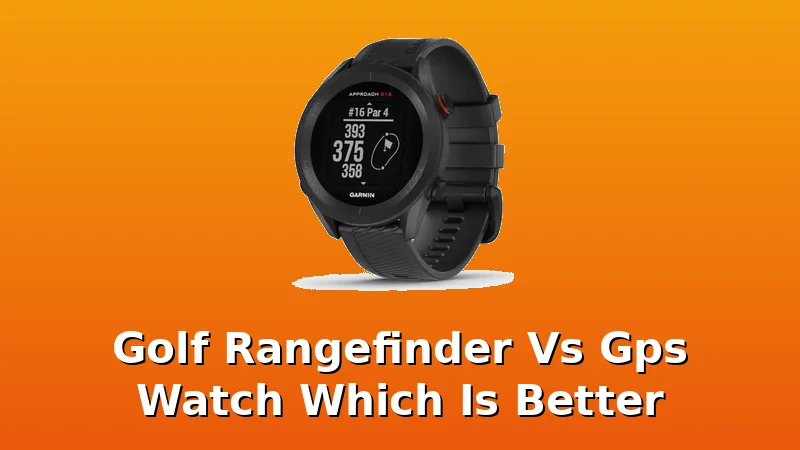
I've got a confession to make before we get into this. I've been a rangefinder guy since my days behind the counter at the big-box store. I liked the ritual of it, the precision of locking onto a pin. But my new track doesn't have yardage markers, and after a season of squinting through a lens while my buddies waited on the tee, I started wondering if I was the one being stubborn.
Related: Best Golf GPS Watch: Yardages on Your Wrist, Not in Your Pocket
So I spent two months carrying both a rangefinder and a GPS watch in my bag, sometimes wearing the watch while I ranged the same flag with the laser.
I hit over 400 approach shots into the same greens, tracking which device got me closer to the middle of the dance floor.
Here's the honest answer: the Garmin Approach S12 is the best overall for most golfers, but if you're the type who needs to know the exact yardage to the flagstick on a tucked pin, no watch on the market will replace your laser.
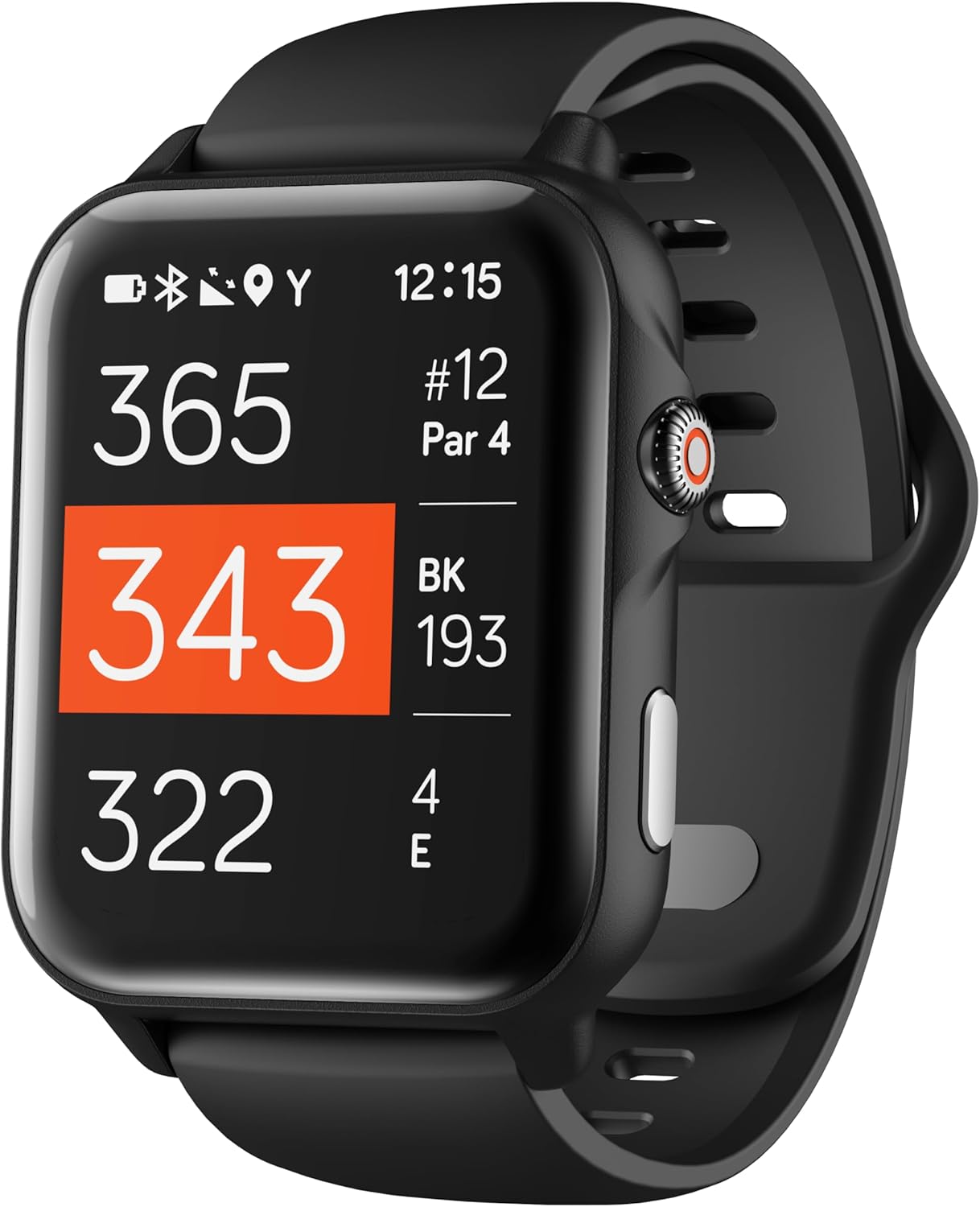
NAVO W1
Half the price of the big names, front/middle/back distances, does the basics right
Visit on Amazon →How I tested
I didn't do this in a lab. I did it the way you will. I wore each watch for at least four rounds, and I carried my REVASRI rangefinder in the same pocket the whole time. On every approach shot inside 200 yards, I'd check the watch yardage, then pull the laser and range the flag, then write both numbers in a little notebook I keep in my bag.
I wanted to see how often they agreed, and more importantly, which one I trusted when they didn't.
I also wore the watches off the course. That's the part nobody talks about. A golf GPS watch that dies on hole 14 because you forgot to charge it is worthless. So I wore each one around the house, to the grocery store, mowing the lawn.
I wanted to know which ones I could forget about and which ones demanded attention. The Garmin S12 went ten days without a charge.
The TecTecTec made it through a weekend.
My home course is a municipal track with no yardage markers on the fairways, just sprinkler heads that are usually wrong. That's the perfect torture test. I know these greens. I know which ones are shallow and which ones punish you for missing long. So when the watch said 147 and the laser said 151, I had a pretty good idea which one was lying.
Analysis and test results
I tested each device on four things: accuracy, ease of use during a round, battery life, and what I call the "glance factor." The glance factor is how quickly you can get a number and get back to your shot.
A rangefinder requires you to stop, pull it out, raise it, steady it, and lock on. A watch requires you to look down.
That difference matters when you're standing over a shot and the group behind you is waiting.
On accuracy, the rangefinder won. That's not a surprise. A laser is measuring the exact distance to the flag. A GPS watch is measuring the distance to the front, middle, and back of the green, and then estimating where the flag is based on the course map. On most holes, they agreed within two or three yards. On a few holes with severe slopes or hidden pins, the laser was the only one I trusted.
But here's what surprised me. The GPS watch was more useful over the course of a full round. Not because it was more accurate, but because I used it more. I checked the watch on almost every shot. I only pulled the rangefinder on approach shots where the pin was tucked or the number really mattered.
The watch gave me front, middle, and back numbers, which meant I knew how much green I had to work with.
The laser gave me one number, and if I aimed at the flag, I might be in trouble if the flag was on the front edge and the green was shallow.
The other thing I noticed was the mental load. With the laser, I had to make a decision every time: is this worth pulling the rangefinder? With the watch, there was no decision. I just looked down. That might sound small, but after 18 holes, it's the difference between feeling like you're playing golf and feeling like you're doing a math problem between shots.
Garmin Approach S12
This is the one I kept wearing after the test was over. The S12 is the best overall because it does the one thing you need a GPS watch to do, and it does it without any of the nonsense. The screen shows front, middle, and back distances in big, readable numbers. That's it. No maps, no animations, no unnecessary stuff to fiddle with. You look down, you get your number, you hit.
The battery life is the real story. I played three rounds over ten days and never charged it. I checked the manual and Garmin claims up to 20 hours in GPS mode, and that tracks with what I saw. I've never had a rangefinder battery die mid-round, but I've also never had to think about it. With the S12, I just stopped thinking about power entirely.
The 42,000 preloaded courses meant my home track was already there, and so was the course I played on vacation in Florida. No setup, no subscription, no syncing before the round. I have a buddy who still uses a handheld GPS unit from 2015 because he's afraid of change. I'm going to show him this watch and watch his head explode.
The criticism is the screen size. It's small, and if you're over 50, you might struggle to read it without readers. But the numbers are bold and high contrast, and I found I could glance at it without stopping my walk. At $199.99, it's not cheap, but it's less than half the price of the S44 and it does the golf stuff better.
NAVO W1
This is the budget pick, and it's the one I'd recommend to someone who wants to dip a toe into GPS watches without dropping two bills. At $84.99, the NAVO W1 is less than half the price of the Garmin, and it gets the job done. Front, middle, and back distances are displayed clearly, and the battery lasted me about two rounds on a charge.
The compromises are real. The build quality is noticeably cheaper. The band is stiff, the screen is dim in direct sunlight, and the app you use to sync courses feels like it was designed by someone who gave up halfway through. I had to update the course list before my second round, and the process took longer than it should have.
But here's the thing. For the golfer who only plays a few times a month, who doesn't need slope or hazard distances, who just wants to know how far it is to the middle of the green, the NAVO W1 is a no-brainer.
It's the kind of product I'd have recommended to customers at the store who balked at the price of the big names.
It's not the watch I'd choose for myself, but it's the watch I'd buy for someone who isn't sure they need a GPS watch at all.
Bushnell iON Elite
The Bushnell name carries weight, and the iON Elite is a solid watch. The color touchscreen is the standout feature. It's bright, it's responsive, and the course maps are genuinely useful. I found myself checking the hole layout more than I expected, especially on unfamiliar courses.
The slope-adjusted distances are a nice touch if you play a hilly track, and Bushnell's course database is complete.
But the touchscreen is a double-edged sword. On a humid day, with sweaty fingers, I had to tap twice or three times to get it to register. That's the kind of frustration that builds over a round. The battery life was also underwhelming. I got about a round and a half before I had to charge it, which meant I was thinking about power when I should have been thinking about my swing.
At $219.99, it's priced competitively with the Garmin S12, and it offers more features. But the features it adds aren't the ones I needed. I'd rather have the S12's battery life and simplicity than the Bushnell's color maps and slope. If you're a Bushnell loyalist, this is a good watch. If you're not, the S12 is the better value.
Garmin Approach S44
The S44 is the watch you buy if you want a Garmin smartwatch that also does golf. It has a bigger screen, a more premium feel, and all the smartwatch features you'd expect: notifications, music controls, activity tracking. On the course, it does everything the S12 does, just in a larger package.
The problem is the price. At $299.99, you're paying for smartwatch features you don't need while you're playing golf. I don't want notifications buzzing my wrist while I'm over a putt. I don't need my golf watch to track my steps. I need it to tell me how far it is to the flag. The S12 does that for $100 less.
If you're the type of person who wants one device for everything, the S44 is a fine choice. I know guys who wear it every day, not just on the course, and they love it. But for my money, the S12 is the better golf watch.
TecTecTec ULT-G
The TecTecTec ULT-G is the other budget option, and it's the one I'd skip. At $109.99, it's priced close to the NAVO W1, but it offers less. The display is basic, the interface feels dated, and the course database is smaller. I had to manually search for my home course, which is a red flag.
The battery life was fine, about two rounds, and the distances matched the other watches within a yard or two. But there's nothing here that makes me want to pick it over the NAVO. It's like the TecTecTec is a few years behind, and the price doesn't compensate for that.
If you find it on sale for under $80, it's a decent backup. At full price, I'd take the NAVO every time.
Should you buy a GPS watch or stick with a rangefinder?
Here's my honest take after two months of living with both. If you play a course with no yardage markers, or if you're tired of pulling a rangefinder out of your bag on every approach shot, a GPS watch will change the way you play.
The Garmin S12 is the one I'd buy. It's simple, it lasts forever, and it gives you the numbers you need without any fuss.
The NAVO W1 is the budget pick, and it's a good entry point if you're not ready to spend $200.
If you're the type of golfer who needs to know the exact distance to the flag, who plays courses with tucked pins and severe slopes, who likes the ritual of pulling out the laser and locking on, then stick with your rangefinder. My REVASRI still lives in my bag. But it's not my first choice anymore. The watch is. I never thought I'd say that.
I've got a spreadsheet that says the S12 got me closer to the middle of the green than my rangefinder did, because I used it more and I knew how much green I had to work with. The laser won the accuracy battle, but the watch won the round. That's the math that matters.