Most golfers spend money in the wrong order. A new driver costs a few hundred dollars and buys a few yards on your best swing. A GPS golf watch hands you the real number on every hole, every round, for years, and it never asks you to change your swing.
I have watched this play out from both sides of a golf shop counter. Players who know their actual yardages score better than players who guess, and most of us guess from 150 yards in.
GPS golf watch setup takes about ten minutes, and most of that is standing outside waiting for satellites. The rest is knowing which numbers to trust once the watch is on your wrist. Here is the whole process, plus the one small piece of gear that keeps the rest of your pocket junk from beating up your watch.
Why you should trust me
I spent six years behind the counter of a big-box golf store as a club fitter and repair tech. I have regripped a thousand clubs, reshafted drivers, and watched the markup math happen in real time. A driver that sells for a few hundred dollars costs the store a fraction of that, and the difference has almost nothing to do with how the ball comes off the face. That view killed whatever brand loyalty I had.
I play to a low-90s handicap twelve years in, and I am fine with it. I keep a spreadsheet of every ball hit, round played, and month owned per product, and I post durability updates at week three and month six, the way real owners do. When friends ask me what to buy, I take it seriously, because I have been the guy who bought the net that ripped on the first bucket of real balls.
What that means here: I am not going to tell you a GPS watch is magic. It is a measuring tool. The question is whether it gives you a number you can trust without slowing down your round.
How I picked and how I tested
Every piece of gear I recommend has to pass four questions. What does it do that the cheap option does not? Will it survive a season bouncing around in a bag? What breaks first, and can I fix or replace it cheaply? Would I still recommend it after six months of real rounds?
For this guide, the test got narrower. A GPS watch is a tool you look at thirty or forty times a round, so it has to give you a yardage in one glance, in direct sun, with a glove on and sweat on your face. It has to survive a full round plus the drive home on one charge. And the course list has to already be in the watch, because nobody wants to be downloading a course map in the parking lot ten minutes before their tee time.
The pouch had a simpler job. It has to keep keys, a wallet, and a phone from grinding against each other in a side pocket, and the zipper has to stay closed when a cart hits a root. That is the whole test. If a zippered pouch fails it, it is not worth carrying.
What to carry before you start
You do not need much to run this setup. A watch on the wrist, and somewhere to put the things you do not want swinging around in your pockets.
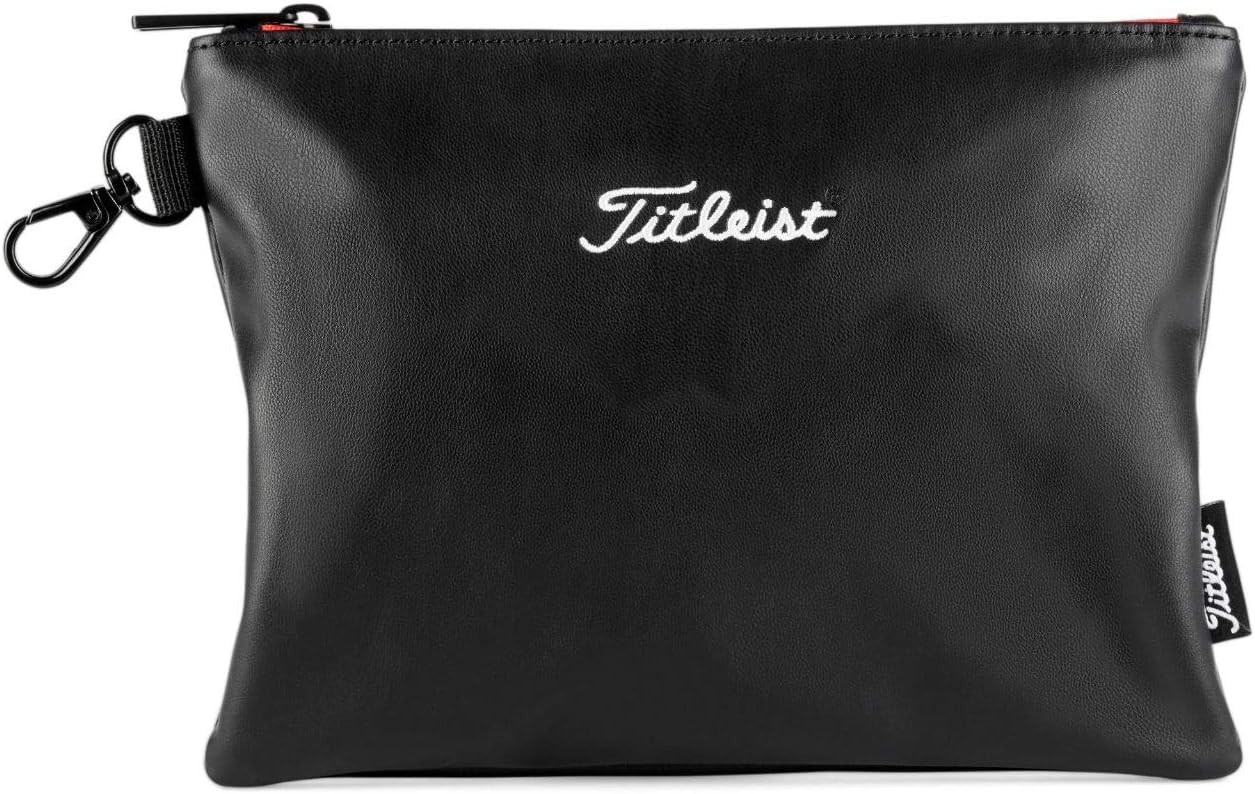
Bag pick: Titleist Travel Gear Professional Zippered Golf Pouch Black
 Visit on Amazon →
This is a simple zippered pouch, and simple is the point. Keys, a phone, a wallet, a spare watch, and a couple of tees go in, the zipper closes, and nothing ends up on the cart path when you hit a bump. Black hides cart dust and range dirt better than anything light colored, which matters more than people admit when a pouch lives in a bag all season.
The job it solves is the one nobody thinks about until it bites them. I have watched a rangefinder bounce out of an open side pocket and skid across a path, and I have watched a phone screen get chewed by a set of keys over a summer. A pouch with a real zipper ends both problems.
Flaws but not dealbreakers: It is a pouch. It will not organize an entire bag, and it will not keep a soaked rain glove from making everything inside it damp. Keep the wet stuff in a separate pocket.
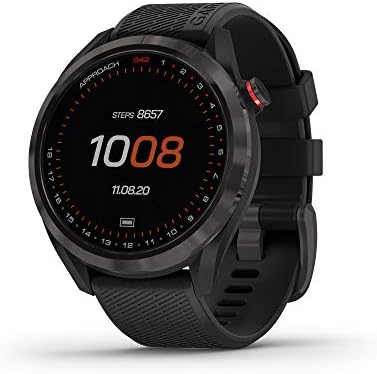
Our pick: Garmin Approach S42, GPS Golf Smartwatch, Lightweight with 1.2" Touchscreen, 42k+ Preloaded Courses, Gunmetal Ceramic Bezel and Black Silicone Band, 010-02572-10
 Visit on Amazon →
The Approach S42 is the piece that does the actual work. It is a lightweight GPS golf watch with a 1.2 inch touchscreen, a gunmetal ceramic bezel, and a black silicone band, which is the combination you want on a wrist that swings a club forty times a round. The silicone band does not slide around when your arm is sweaty, and the touchscreen is big enough to read a yardage at a glance instead of squinting at it.
The 42k+ preloaded courses are the feature that matters most to me. The number one failure point for any golf GPS is the setup step before the round. If you have to find a course, download it, and wait, you will stop using the thing by June. With the courses already on the watch, it is ready when you are.
Flaws but not dealbreakers: A touchscreen is a touchscreen. In heavy rain or with a thick winter glove, dry your finger off or use the side buttons before you trust a tap. It is also a golf watch first, so do not expect a full smartwatch experience on your wrist.
The actual setup workflow
This works on any GPS golf watch, and it takes one practice nine to get right.
Step one: Charge it the night before. A dead watch on the first tee is the most common version of this failure. Put it on the charger next to your phone and make it a habit.
Step two: Set the units to yards. Sounds obvious. It is not, and I have watched a player spend four holes confused by meters before he figured it out. Do this at home, not on the course.
Step three: Find your home course in the preloaded list. Do this from your couch. Confirm the course name matches the one you are actually playing, because a lot of courses share names with the muni two towns over.
Step four: Get a satellite lock outside before the first tee. Walk to the first tee with the watch already on and let it settle. A GPS watch that has been sitting in a bag in the trunk takes longer to lock than one that has been on your wrist for ten minutes in open air.
Step five: Play to the middle, not the flag. This is the part that actually lowers scores. A GPS watch gives you front, middle, and back numbers for the green. The flag is somewhere in between. The middle number is the one that keeps you on the putting surface, because it survives a slightly thin strike or a slightly fat one.
Step six: Write your real numbers down. After three or four rounds, you will know what your 7 iron actually carries, not what the sticker on the shaft says. That log is worth more than any club upgrade you can buy. I have kept mine for years, and it is the single most useful page in my golf notebook.
Step seven: Manage the round, not the watch. Charge it, wear it, and keep your routine identical every time. Phone, keys, and wallet go in the pouch on the first tee and come out in the parking lot. Nothing changes on the course, which is exactly how it should be.
The competition and why it lost
Phone GPS apps are the free version of this, and they are fine until the third hole, when your phone is at 40 percent and you are tapping through a lock screen with a golf glove on. Battery drain alone kills the idea for a full 18.
Laser rangefinders are the other option, and they are good at a specific job: shooting the flag for an exact number. They need line of sight, steady hands, and a clear view of the pin, and the number to the flag is often not the number you should be playing to. If you want the pin number, a rangefinder earns its place in the bag. If you want the number that decides the club, the watch is the faster tool.
Handheld GPS units work, but they are one more thing to pick up, charge, and lose. General fitness smartwatches count steps, not yardages, and a step counter does not help you pick a club.
Pacing it off is free and it is slow, and it falls apart on a course with no yardage markers, which is exactly the course where you need a number the most.
What this all costs
The watch is a one time buy and the pouch is a rounding error next to it. Phone apps look cheaper until you add up the annual subscription and the phone battery you burn through, and a decent laser rangefinder usually runs more than the watch.
Check current Amazon price on both items before you order, because golf gear pricing moves around with the season and with whatever model is being replaced.
The math that matters is not the sticker. It is cost per round. A watch you wear for two seasons of weekend golf works out to pocket change per round, and it removes the guesswork that costs you strokes on every approach shot. That is a better trade than most of what gets sold in a golf shop.
The short version
Set the units to yards, load your home course at home, get a satellite lock before the first tee, and play the middle number. Keep the pocket junk in a zippered pouch so your watch and your phone survive the season. Do that once and the setup disappears into your routine, which is the whole point.