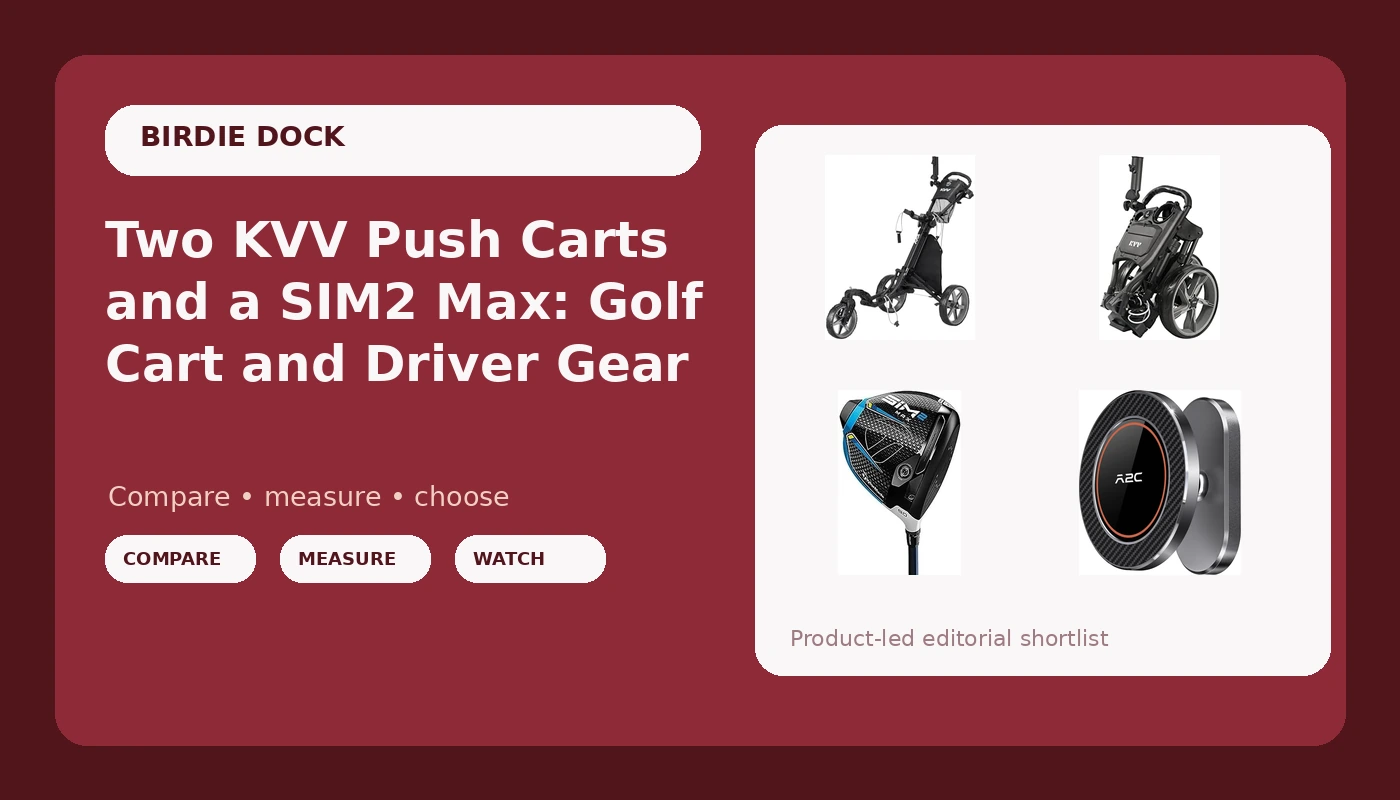
September in Scottsdale is the first month you can walk eighteen holes without feeling like you are inside a convection oven, which makes it the right time to look at golf cart and driver gear as a whole instead of one item at a time. The four products below do not compete for the same slot in your bag. Two are push carts, one is a phone mount that lives on the cart, and one is a driver. I grouped them because this is how a real golf budget works: one purchase that changes your scoring, a couple that change how the round feels, and one that just makes the walk nicer.
I spent six years behind the counter of a big-box golf shop, fitting clubs and doing repairs, before I moved to a desk job. I have regripped a thousand clubs and reshafted more drivers than I can count, and I watched the markup math happen in real time. That job killed whatever brand loyalty I had. What it gave me instead was a set of questions I ask about every piece of gear, and those questions are the spine of this comparison.
So here is the job of this article: tell you which of these four is worth your money first, which one only makes sense in a specific situation, and which one you can skip without losing a thing. I am not printing prices because they move week to week, and because the number that matters is not what you pay on day one. It is what you spend to keep the thing working.
If you walk your rounds, the KVV 360 rotating front wheel cart is the one I would point most golfers toward. If you ride or split your time, the A2C magnetic phone holder is the smallest spend here with the most immediate payoff, and the TaylorMade SIM2 Max is the only item on this list that can take strokes off your card rather than just making the walk easier.
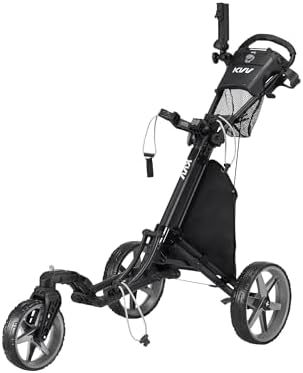
KVV 3 Wheel 360 Rotating Front Wheel Golf Push Cart Open and Close in ONE Second-Free Umbrella Holder Included
Rotating front wheel steers with one hand, and the one second open and close claim addresses the worst part of walking golf
More moving parts in the front wheel assembly than a fixed front wheel cart
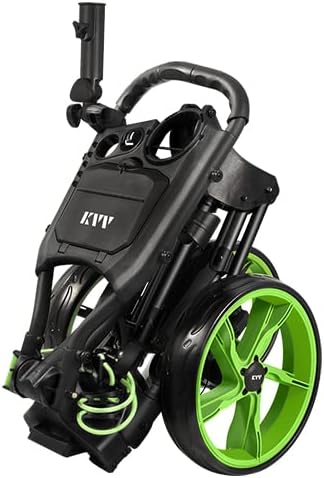
KVV 3 Wheel Foldable/Collapsible Golf Push Cart Ultra Lightweight Smallest Folding Size, New-Version Scorecard Holder Umbrella Holder Included
Lightweight frames are easier to push and easier to knock around on sidehills
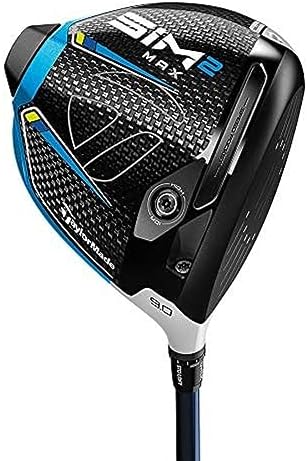
TaylorMade Golf SIM2 MAX Driver
The Max head is the forgiveness-first build in that family, so mishits lose less
The stock shaft is the deciding factor, and most golfers never check it
<img src="/images/products/B0D2X9PWLR.jpg" alt="A2C Alloy Magnetic Golf Cart Phone Holder, Unique Golf Accessories for Men
Golf Gifts for Men Dad Father Husband Women Golfers, Golf Accessories Essentials Gadgets Gear Stuff Fits EZGO Club Car Yamaha
Prices and availability were captured from Amazon Creators API and may change.
How I judge gear like this
Four questions, every time. What does it do that the cheapest version does not? Will it survive a season of real use, not a season of careful use? What breaks first, and can I replace that part cheaply? And would I still recommend it after six months?
For push carts, the answers live in the frame joints, the brake, the wheel bearings, and the umbrella clamp. A cart is a folding mechanism with wheels bolted on. The folding mechanism is the whole product. Every hinge is a place that can loosen, and every plastic latch is a place that can crack in cold weather or in a hot trunk. The wheel bearings are the part nobody checks until the cart starts pulling left on a flat fairway.
For drivers, the answers live in the shaft, the grip, and the adapter. The head is the marketing. The shaft is the fit. I have watched golfers buy a driver because of the badge on the sole, then fight a shaft that was two flexes and 20 grams away from what their swing actually needed. If you take one thing from this comparison, take that.
For accessories, the question is simpler: does it solve a real annoyance, and does it fail in a way that costs you your phone? A mount that drops a phone on a cart path is worse than no mount at all.
KVV 3 Wheel 360 Rotating Front Wheel Golf Push Cart
The headline feature here is the rotating front wheel, and the listing also promises an open and close in one second with an umbrella holder included. That combination is aimed squarely at the walker who is tired of wrestling a cart in the parking lot.
A rotating front wheel changes how the cart handles. Instead of lifting the front end to turn, or muscling a fixed wheel around a tight corner, the wheel swivels and the cart follows your hand. On a narrow path between two greens, or in a crowded bag drop, that is the difference between steering and shoving. It is also the reason this cart is the one I would hand to most walkers. The one second fold claim is the second half of the same idea. If setup and breakdown take 90 seconds each, you stop walking and start riding, and the cart was a waste of money.
The trade-off is mechanical. A swiveling front wheel has more parts than a fixed one, and more parts means more places for grit to work in and for a bearing to start grinding. That is not a reason to avoid it. It is a reason to rinse the front assembly and check the pivot play a few times a season, the way you would check a folding chair you leave outside.
What I would check on any cart in this class: the brake engagement on a slope, the tightness of every hinge pin, and whether the umbrella holder clamp holds a shaft steady in wind rather than letting it drift. Those three checks tell you more than any spec sheet.
KVV 3 Wheel Foldable/Collapsible Golf Push Cart Ultra Lightweight
This is the second KVV cart, and it solves a different problem. The listing leads with ultra lightweight and the smallest folding size, plus a new version scorecard holder and an umbrella holder. If you drive a sedan with a trunk full of groceries, or you keep your cart in a closet, this is the one the other cart is not.
Small folded size is a packaging trick as much as an engineering one. To get a cart small, you add folds. To add folds, you add joints, latches, and pins. So the honest trade-off is this: the cart that takes up the least room has the most places to check. Before you trust it, open and close it a few times and watch the locking pins. A pin that does not fully seat is the failure that puts your bag on the ground in the middle of a fairway.
Light weight cuts both ways too. A light cart is easier to push up a hill and easier to push through wet rough. It is also easier to tip on a sidehill lie, and easier for a gust to move when you have the umbrella up. If your home course is flat and wide, that is a non issue. If it is a tight, tilted track, it is worth thinking about.
The scorecard holder is a small feature that I actually care about, because it means the card and pencil have a home instead of riding loose in a pocket or under the bungee. Small features are what separate a cart you keep from a cart you sell.
TaylorMade Golf SIM2 MAX Driver
This is the outlier on the list, because it is not gear around the cart. It is the club in your hands, and it is the only item here that can change your score rather than your setup. In the SIM2 family, the Max badge is the forgiveness-first head, which means it is built for the golfer who wants mishits to lose less distance and less direction. That is most golfers, and it is not a knock. It is the point.
Here is what I would actually do with a driver like this, and it comes straight from my fitting years. Before you buy, find out what shaft is in it and whether that shaft matches your swing speed and tempo. The same head with the wrong shaft is a completely different club. Second, price out a regrip and a reshaft before you commit, because a driver is a head plus a consumable plus an adapter, and the cost of ownership lives in those last two. Third, be honest about what you are replacing. If your current driver already launches in a window you like and your miss is a small heel strike, a new head is not your problem. Your strike location and your tee height are.
The strongest case for this driver is a golfer playing an older, unforgiving head who loses the ball right and short on off-center hits. The weakest case is a golfer chasing distance who has never checked their launch numbers. That golfer needs a fitting more than a new club, and I will say that every time.
A2C Alloy Magnetic Golf Cart Phone Holder
The listing describes an alloy magnetic mount that fits EZGO, Club Car, and Yamaha carts. That is the whole pitch, and it is a good one, because the phone has quietly become the most used piece of gear in the round. It is your GPS, your scorecard, your group chat, and your weather radar.
A magnetic mount does one thing better than a clamp: it is one handed. You slap the phone on when you pull up to the tee and pull it off when you walk to your ball. Clamps require two hands and a bit of patience, and after hole twelve your patience is gone. The alloy body matters here, because plastic mounts in a hot car get brittle and crack at the arm joint, which is exactly the failure point.
The honest caveat is magnet strength versus your case. A thin case with a magnetic ring holds fine. A thick case, a wallet case, or a case with no magnet-friendly backing is where these mounts fail, and the failure mode is a phone on the cart path. Test the hold over a couple of bumps before you trust it on a fast cart. If your case is the problem, the fix is a magnetic ring or plate, not a different mount.
The trade-offs the listings leave out
- Small folded size costs you rigidity. Every extra joint is a hinge that can loosen, so the smallest cart needs the most attention.
- A rotating front wheel steers beautifully and adds a bearing you have to maintain. A fixed front wheel is simpler and clumsier.
- Lightweight frames are easier to push and easier to tip. Wind and sidehills expose that.
- Umbrella holder clamps are the most commonly overlooked part on any cart. A clamp that slips turns a good umbrella into a sail.
- Magnetic phone mounts depend on your case, not on the mount. Budget for a magnetic ring if your case is thick.
- Driver forgiveness is a real, measurable benefit, and the shaft inside the head is still the biggest variable in the whole equation.
- Brakes wear. Cable actuated brakes stretch. If you park on a slope, check the brake before you walk away from the cart.
What I would buy first
If you walk, the cart comes first, and between the two KVV carts the decision is about your trunk and your course, not about quality. Flat, wide course with a big trunk: take the rotating front wheel model. Tight course, small car, closet storage: take the ultra lightweight folding model and stay on top of the pins.
If you ride, the phone holder is the first thing I would add, because it costs the least and solves something you touch ten times a round.
The driver is a separate decision with a separate budget, and it should be last only if your tee game is already the strength of your round. If your driver is the reason you are playing your third shot from the trees, it should be first, and the SIM2 Max is a sensible head to build around. Just get the shaft right, or none of it matters.
How I update this
I keep a log on the gear I live with: rounds played, months owned, and what broke. I check in at week three and again around month six, because a cart or a mount that feels great in week one can be rattling by month three. On carts, that means hinge play, brake bite, and bearing noise. On mounts, that means magnet hold after a summer in a hot car. On drivers, that means grip wear and whether the adapter is still tight.
That is the standard I hold these four to, and it is the standard you should hold them to before you spend anything. The gear that survives month six is the gear worth recommending, and nothing on this list gets a pass just because the listing says it is premium.