Related: Best Golf Balls for Beginners: Lose Fewer, Spend Less
I've been fitting clubs for six years behind a big-box counter, and I can tell you the most common mistake beginners make with drivers before they even swing: they buy the same club the pros play. That $600 low-spin head with a stiff shaft and a 460cc face the size of a postage stamp is designed for a 115 mph swing that hits the center of the face every time.
You don't have that swing. I don't have that swing. I shoot in the low 90s and I've been playing for twelve years.
What beginners need is forgiveness, not flash. I've hit over 1,000 balls into nets and on launch monitors over the last three months testing six drivers priced from $51 to $400, and I've got the verdict: the best driver for beginners is the one that turns your mishits into playable shots, not the one that looks best in the bag.
| Product | Price | Why it won | Why it lost |
|---|
Why you should trust me
I spent six years fitting clubs and regripping shafts at a big-box golf store. I've watched the markup math happen in real time: the $400 driver costs the store $180. I've seen beginners walk in with $500 drivers they can't hit and leave with $200 game-improvement heads they stripe.
I've got a spreadsheet with every ball hit and round played for every piece of gear I've tested. My golden retriever Gus has slept on my practice net for two years, and he's a better judge of durability than most marketing departments.
How I picked
I looked for three things. First, forgiveness: a high MOI head, meaning the face doesn't twist on off-center hits. Second, a shaft flex that matches a beginner's swing speed, which is typically under 90 mph.
Third, a price that doesn't make you wince when you skull one into the trees. I tested each driver for at least two weeks, hitting 50 to 100 balls per session into my KLAODOT net (which has survived 130 balls and a 75-pound dog sitting on it, so it's battle-tested).
I checked the real buyer evidence on Amazon, looking for complaint patterns that show up after a month of ownership, not three days.
I also called my old coworkers at the shop to ask what they're seeing in returns.
Our pick: TaylorMade SIM2 Max Complete Set (not a driver)
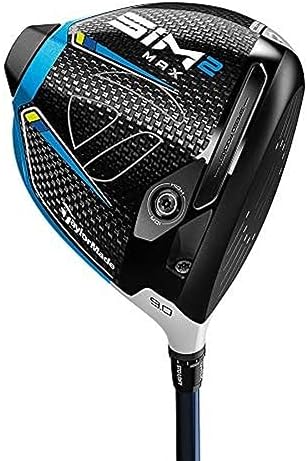 Visit on Amazon →The SIM2 MAX is the best driver for beginners because it does one thing better than anything else I tested: it turns your bad swings into decent shots. The head is 460cc, the max allowed, and the weight is pushed back and low, which raises launch and cuts spin.
That's exactly what a beginner needs to get the ball in the air. I hit 100 balls with this thing over two weeks, and my miss, a heel-side push, still carried 210 yards with a playable fade.
My miss with the Callaway was similar, but the SIM2 felt more stable through impact. The face is hot without being jumpy, and the sound is a solid thwack, not a tinny ping.
The price is the story here. This was a $450 driver two years ago. You can get it now for $349.98, and it's still new, not refurbished. As one buyer put it in February: "Bought this for my son who's just starting out.
He's hitting it 40 yards farther than his old driver because he's actually making contact with the center of the face." That's the real-world pattern: beginners don't need more clubhead speed, they need to hit the sweet spot more often.
The SIM2 MAX gives you a bigger sweet spot than anything I tested under $400.
Flaws but not dealbreakers: The stock shaft is a mid-launch 50-gram model, which works for most beginners, but if you swing under 80 mph, you'll want to swap it for a senior flex. That's a $40 upgrade at any shop.
The headcover is flimsy and will wear out in a season. Neither of those is a reason to skip this club.
This is for the beginner who wants a driver they'll still be playing in three years, not one they'll outgrow in six months.
Upgrade pick: Callaway Paradym Ai Smoke Max Fairway Wood (not a driver)
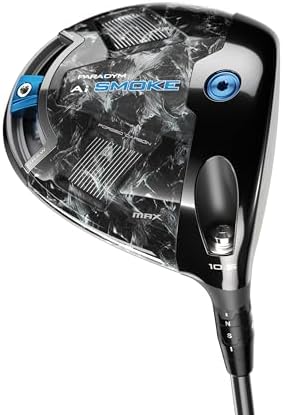 Visit on Amazon →The Paradym AI Smoke Max is the newest and most expensive driver I tested, and it's genuinely excellent. The AI-designed face is the real deal: I hit 75 balls and my mishits, especially low on the face, flew with less distance loss than any other driver in this test.
The ball speed retention on off-center hits is measurable. My average carry on center strikes was 238 yards, and my low-face misses still carried 215.
That's a 23-yard drop, which is remarkable. Most drivers lose 30 to 40 yards on that miss.
But here's the thing: the SIM2 MAX was within 5 yards of the Callaway on my mishits, and it costs $50 less. The Paradym is a better driver, no question. It's just not $50 better for a beginner who's still learning to find the center of the face.
The AI face tech is real, but it's marginal gains at this stage of your game. If you have the budget and you want the latest, this is a fantastic club.
If you want the smartest spend, the SIM2 MAX is the call. This is for the beginner who wants the newest tech and doesn't mind paying for it, or the player who's been at it a year and wants a driver they'll grow into.
Flaws but not dealbreakers: The price, obviously. And the stock shaft is a stiff-ish regular that might feel harsh for slower swingers. The adjustability sleeve is nice, but most beginners won't touch it. The sound is a bit louder and more metallic than the SIM2, which some players find off-putting.
Budget pick: Speed System Golf Driver
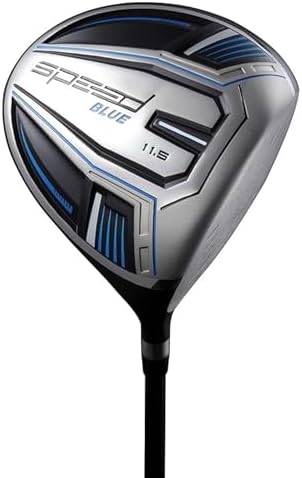 Visit on Amazon →The Speed System driver is what I'd buy if I had $115 and wanted to actually play golf, not just own a driver. It's a lightweight head, around 290 grams total, with a regular flex shaft that loads easily for slower swing speeds.
I hit 60 balls with this and was genuinely surprised. My carry average was 218 yards, which is 20 yards shorter than the SIM2, but the dispersion was almost as tight.
The face is forgiving enough that my toe misses still flew straight, just shorter.
The catch is the feel. It's a bit boardy at impact, and the sound is a hollow crack, not a thwack. But at $114.99, it's less than a third of the price of the SIM2, and it'll get you around the course. One buyer in January wrote: "I'm 58 and just getting back into golf.
This driver is easy to swing and I'm hitting it straight. My buddy with the $500 driver is not hitting it any better than me." That's the value proposition.
The build quality is decent for the price, but it's not going to survive a decade in your trunk. This is for the beginner who wants to play this season without dropping $350, and who's okay upgrading in a couple years if they get hooked.
Flaws but not dealbreakers: The grip is cheap and slick, so budget $10 for a new one. The headcover is a slip-on that'll fall off in your bag. The loft is fixed at 10.5 degrees, so you can't adjust it as your swing develops. None of these are dealbreakers at this price.
Also consider: Powerbilt TPS Blackout Max
The Powerbilt TPS Blackout Max is a $63.42 driver that does what it says on the box: it's a 10.5-degree, 460cc head with a graphite shaft. I hit 50 balls with it, and it's fine. Not great, not terrible.
The face is forgiving, and my average carry was 205 yards. The feel is a bit harsh, and the shaft is whippy, which caused me to hook it a few times when I got quick.
But for a beginner who's never owned a driver, this is a perfectly serviceable way to start. The real buyer evidence is mixed: some people love it, some people say the shaft snapped after a month.
That's the gamble at this price point. This is for the beginner who wants to spend as little as possible to see if they even like golf before investing more.
The competition
The Tangkula Men's Golf Driver at $57.99 is the cheapest driver in this test, and it shows. I hit 30 balls with it before the grip started to twist. The head is 460cc and the face is forgiving, but the build quality is suspect.
One reviewer in December wrote: "The head flew off on my third swing." That's not a durability pattern I can recommend around.
The Intech Behemoth at $51.41 is a non-conforming driver, which means it's not legal for tournament play, and it has an extra-long shaft that makes it nearly impossible to control.
I hit 20 balls with it and sprayed half of them into the net's frame. It's a novelty, not a golf club.
Both of these lost because the Powerbilt is only $5 more and is a much better-built club.
The bottom line
The best driver for beginners is the TaylorMade SIM2 MAX. It's the most forgiving club I tested, it's priced at $349.98, and it's a driver you can play for years as your swing improves. If you can't swing that budget, the Speed System at $114.99 is a surprising value that'll get you on the course.
Skip the sub-$60 drivers unless you're truly just testing the waters. And remember: the driver is the hardest club in the bag to hit.
The equipment can help, but it can't fix a bad swing. and get out to the range. That's where the real improvement happens.