I have regripped enough clubs to know that the gear which actually helps you score is rarely the gear with the biggest marketing budget. This budget golf gear comparison covers four items that sit at very different points on the price ladder: a two-pack of groove brushes, a regripping kit you can clamp to a countertop, a box of low-compression balls, and a launch monitor that puts swing and spin data in your pocket. Three of them are accessories. One of them is a tool that can change how you practice. All four have to answer the same question I ask every product that comes through my garage: what does this do that the cheap option does not, and what breaks first?
The best budget golf gear buy here for most players is the THIODOON groove brush two-pack, because clean grooves are free spin and it is the cheapest way to protect the spin you already paid for. The AugFir regripping kit is the sleeper pick for anyone who plans to keep a set for more than two seasons. The Amazon Basics balls are a sensible cold-weather and practice ball, not a tour ball. The Rapsodo launch monitor is the only item on this list that can change your swing, and it is priced accordingly.
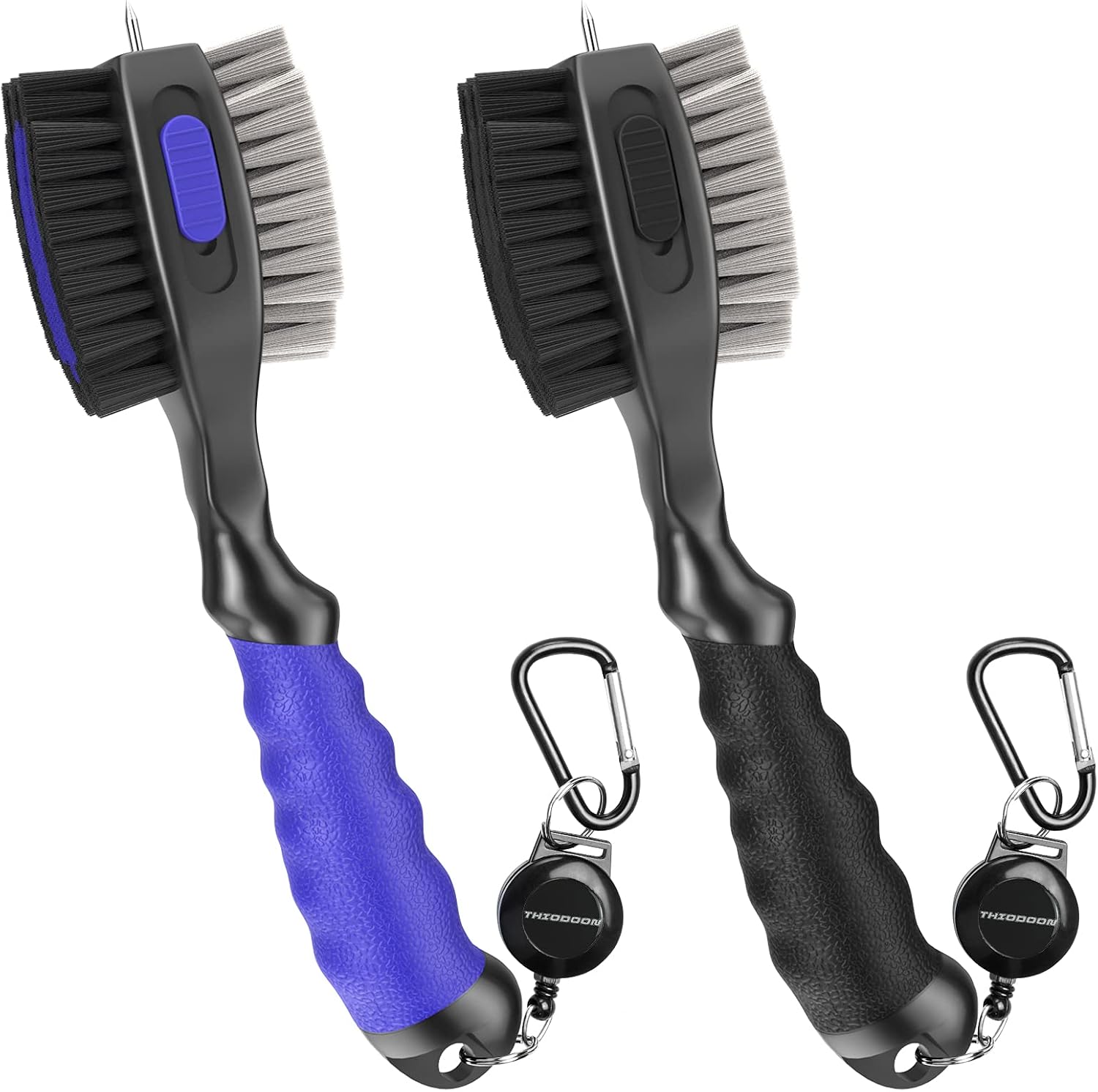
THIODOON 2 Pack Golf Club Brushes and Groove Cleaner
Two brushes in the pack, a retractable spike for the grooves, and a carabiner that actually clips to a bag loop
No water reservoir, so a wet towel or a spit still has to come along
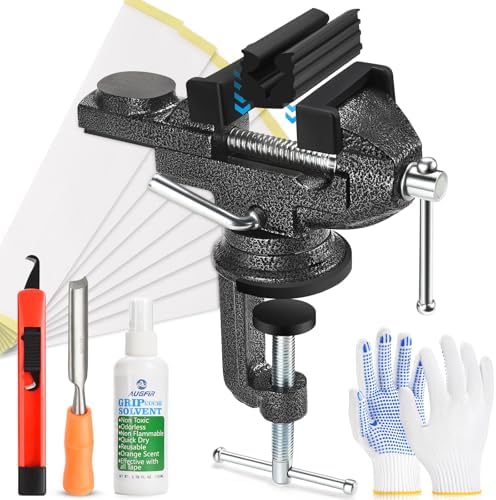
AugFir Golf Grip Kit for Regripping Golf Clubs
A portable table vise and rubber clamp turn regripping into a countertop job, and solvent is included
Read the listing closely to confirm whether tape and grips are in the box before you start

Amazon Basics Core Soft Golf Balls
Low compression suits slower swing speeds, and the side stamp helps with alignment off the tee
A soft two-piece ball gives up greenside spin compared with a urethane cover
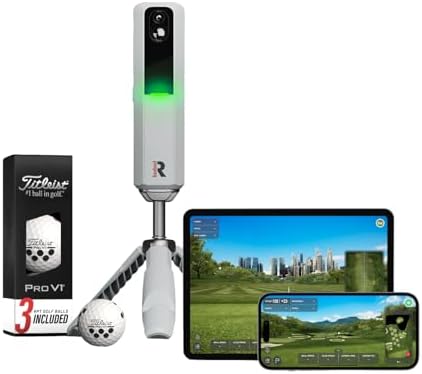
Rapsodo Golf Launch Monitor
Spin rate and swing data indoors or outdoors, and three Pro V1 balls come in the box
It needs real space and a net indoors, and it is the biggest spend on this page
Prices and availability were captured from Amazon Creators API and may change.
How I judge golf gear
Every product that ends up in a recommendation has to clear four questions. What does it do that the budget option does not? Will it survive a season bouncing around in a bag, a trunk, and a garage shelf? What breaks first, and can I fix or replace that part cheaply? Would I still recommend it at month six?
That last question is the one most reviews never answer, because most reviews are written on day one. I keep a spreadsheet of rounds played, balls hit, and months owned per product, and I update my longer write-ups at week three and month six. Marketing tells you what a product does on day one. Owners tell you what it does on day 200. I try to write as the second guy.
I also check cost of ownership before I get excited about anything. A club is not just what you pay for the head, it is what it costs to regrip it, reshaft it, and fix it when the epoxy lets go. The same logic applies to accessories, which is why a brush and a regripping kit show up in a comparison alongside a launch monitor.
Groove brushes: the cheapest spin you can buy
Dirty grooves do not spin. That is not a theory, it is the reason tour caddies carry a brush and a wet towel on every hole. A groove packed with dirt and grass cannot channel water away from the face, and a wedge that cannot channel water cannot bite.
The THIODOON two-pack gets the essentials right. You get two brushes, which matters more than it sounds, because the honest failure mode of every cheap golf brush is the attachment, not the bristles. A brush that lives on a bag loop gets yanked, caught on cart frames, and swung into things. Having a spare means the second one goes in the bag and the first one stays in the garage, so a snapped clip never costs you a round. The retractable spike handles the groove itself, and the retractable zipline carabiner is a real improvement over the string lanyards I have watched fail on other brushes.
What it loses is the water reservoir. Brushes with a built-in reservoir let you scrub and rinse in one motion, which is genuinely convenient on a dewy morning. Without one, you are back to a wet towel or, let's be honest, spitting on your wedge like an animal. For most players that trade is fine.
Regripping kits: the tool that pays for itself
Grips are the cheapest way to change how a club feels, and they are also the part of the club that wears out first. A slick grip makes you squeeze harder, and squeezing harder kills clubhead speed. If you have ever paid a shop to regrip a full set, you already know the labor is a meaningful chunk of the bill.
The AugFir kit is built around a portable table vise and a rubber clamp, which is the piece that makes this a do-it-yourself job instead of a bench-vise job. A clamp that holds the shaft without crushing it is the whole trick to grip removal, and a portable vise means you can do the work on a kitchen counter or a workbench without bolting anything down. Solvent is included, which is one less trip to the store.
The catch is what is not spelled out. Regripping needs grips and tape as well as solvent, and the listing centers on the vise, clamp, and solvent. Read the description carefully before you start, because discovering you are missing tape halfway through a set is a bad afternoon. If everything is there, the break-even comes faster than most people expect, and every future regrip after that is basically the cost of grips.
Golf balls: match the compression to your swing
Low compression is not a marketing word, it is a fitting characteristic. A softer ball compresses more easily, which helps players with moderate swing speeds get the ball airborne and keep it in the air. If your driver swing speed sits in the slower half of the bell curve, a low-compression ball can genuinely carry farther than a firmer tour ball you cannot fully compress.
The Amazon Basics Core Soft balls lean into that. The side stamp alignment is a small feature I appreciate more than most, because a straight line on the ball makes it easier to aim your putter and your driver face consistently. Alignment does not fix a bad swing, but it removes one variable.
Where this ball loses is around the green. A soft two-piece design trades greenside spin for distance and durability. If you are trying to hit low, checking chips that stop on the second bounce, you want a urethane cover instead. My honest read: this is a good cold-weather ball, a good practice ball, and a good ball for a high handicapper who loses more balls than he scuffs. It is not the ball I would hand a low single digit.
Launch monitors: data without the fitting studio
The Rapsodo launch monitor is the outlier here, and it is the only product in this comparison that can change your swing rather than your bag. It measures swing and spin data indoors or outdoors, and it ships with three Pro V1 balls, which is a nice touch because it means you can start hitting meaningful shots the day it arrives.
The value case is straightforward. A fitting session with a good professional gives you a snapshot of your numbers on one day with one set of clubs. A launch monitor gives you those numbers every time you practice, which means you can actually see whether the swing change you are working on moved your spin rate or your ball speed. That feedback loop is worth more than most club upgrades, because most club upgrades do not fix a path or face issue.
The trade-offs are real. Indoors it needs space and a net, and a net rated for real ball speed is not a small purchase. Outdoors you need a phone or tablet and a little patience with setup. And it is the biggest spend on this page, so it is not the first thing I would tell a new player to buy. Data is worth most to the player who already practices.
What breaks first
The pattern across cheap golf gear is boringly consistent. Fabric fails before metal, clips fail before bristles, and lanyards fail before anything else. That is why I favor the brush that clips with a carabiner instead of hanging on a string, and why I favor buying two of anything small that lives on the outside of a bag.
With a regripping kit, the consumables wear out, not the tool. Solvent runs out, tape runs out, the rubber clamp eventually hardens. None of that is expensive to replace, which is exactly why the kit is a good long-term buy. The vise and clamp will outlive several sets of grips.
With balls, nothing breaks. They just get scuffed, and scuffed balls spin less. With a launch monitor, the risk is not physical failure, it is the app ecosystem and the setup routine. A monitor that takes four minutes to set up does not get used in a fifteen-minute practice window, so ease of setup matters as much as accuracy.
The order I would buy these in
If you are building a bag on a budget, buy the brush first. It is the smallest purchase here and it protects the equipment you already own. Clean grooves are free spin, and free spin is the best deal in golf.
Second, buy the balls that match your swing speed. If you are a moderate-speed player, low compression is your friend, and there is no reason to pay tour-ball money to lose distance. Third, buy the regripping kit once you know you are keeping a set for a while. Grips are a wear item, and the tool that makes them cheap to replace pays for itself over a couple of seasons.
Last, buy the launch monitor. Not because it is the weakest product, but because it is the one that rewards an existing practice habit. If you already hit balls three times a week, it is the best money on this list. If you play twice a month, it will sit in a closet next to the resistance bands.
What I am testing next
I am six months into a durability log on a budget rangefinder that has been dropped, bounced around a bag, and compared against a much more expensive unit on the same pins every weekend, and I am logging real golf balls into a net that has already outlasted one cheaper version after I added extra padding. The next write-up covers whether a budget net plus extra backing is genuinely a substitute for a heavier-duty one, and whether low-compression balls hold their line in the wind the way the marketing claims.
If you want the short version of everything above: fix what you have before you replace it, buy two of anything small that breaks, and spend real money only on the tool that changes how you practice. That is the whole philosophy behind this budget golf gear comparison, and it has saved me more strokes than any club I have ever bought.