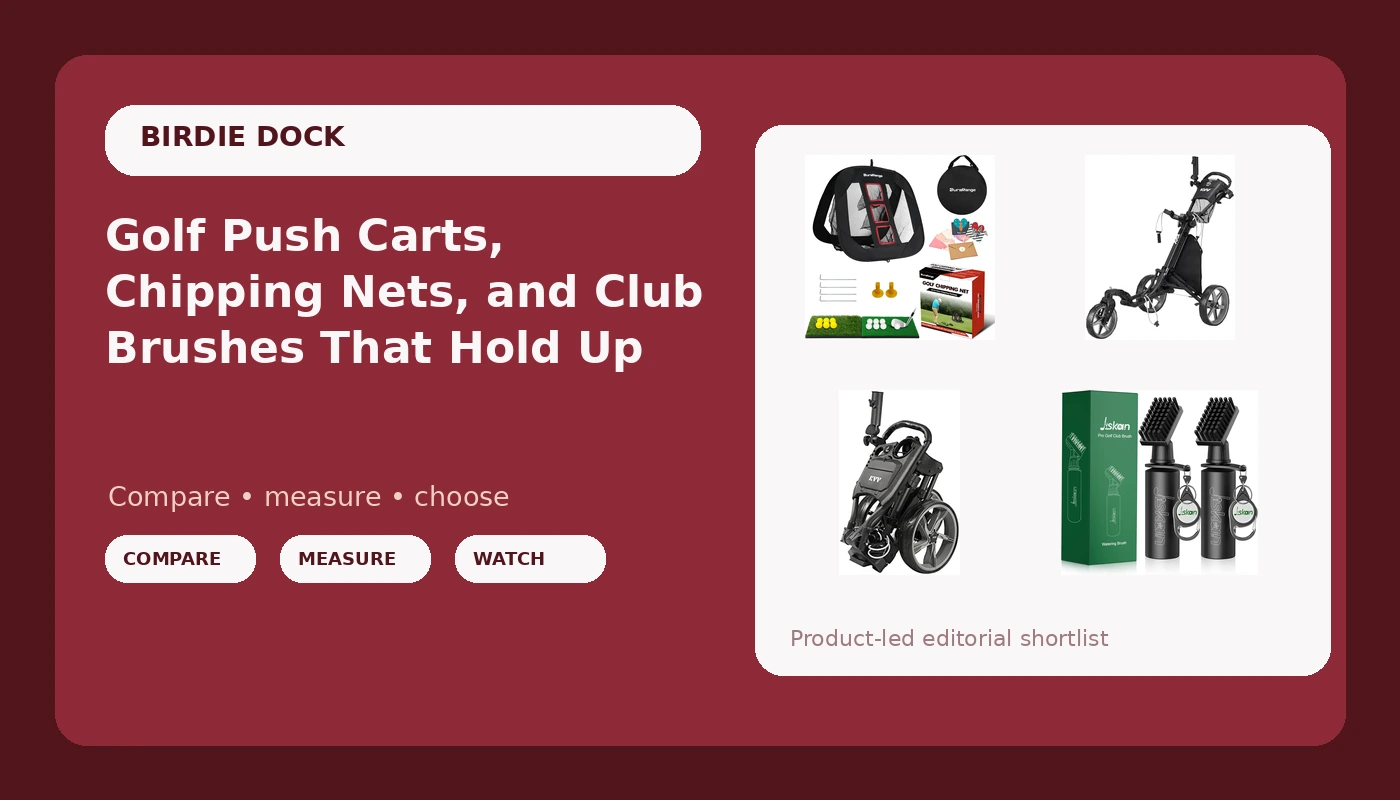
Related: How to Build a Backyard Short Game Setup That Survives Real Balls
A golf push cart and chipping net are two of the least glamorous purchases in this sport and two of the ones you will use the most. I spent six years behind the counter of a big-box golf store as a fitter and repair tech, and nobody walks in excited about a cart. They walk in because their back hurts, or because they want to hit fifty chips in the backyard instead of driving to a range. That is the gear in this guide: two push carts, a pop-up chipping net, and the cheapest item here, a club brush that does more for your score than most expensive upgrades.
I review gear the way I buy it, cheap first and durable second. I keep a spreadsheet of rounds played, months owned, and balls hit per product, and I update my notes at week three and again at month six. A cart that folds in one second but rattles apart by August is not a deal. A cheap brush that keeps your grooves clean for two seasons is. So this guide is built around what actually breaks: folding mechanisms, netting, wheel bushings, and lanyards.
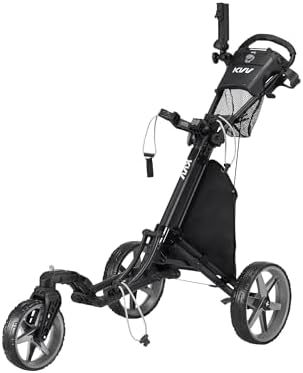
Best Overall: KVV 360 Rotating Front Wheel Push Cart
A swiveling front wheel is the feature that separates a cart you enjoy pushing from one you fight for eighteen holes. This KVV cart's front wheel rotates a full 360 degrees, so you steer it the way you steer a shopping cart instead of lifting the front end and pivoting on the rear wheels every time you turn. Lifting and pivoting is how wheel bushings die. I have seen it in the shop for years: the player who muscled his cart around tight corners all season is the player buying a replacement wheel in September.
The open and close in one second design is the other thing that matters, because setup friction is why carts end up in the garage. If a cart takes forty-five seconds and two hands to unfold, you will carry your bag instead, and then you have bought a shelf ornament.
The umbrella holder is included, which is not a throwaway. A cart-mounted umbrella in August keeps you upright, shaded, and moving instead of rushing a shot to get back to the shade.
What to check before you buy: the brake. Make sure it locks the rear wheels and holds on a side slope, because a cart that rolls while you reach for a club is a cart that dents heads. Then watch the folding latch for metal on metal contact, and check whether the wheels are bolted on in a way you can service yourself. Cost of ownership on a push cart is wheels and bushings, and a cart you cannot take apart is a cart you throw away.
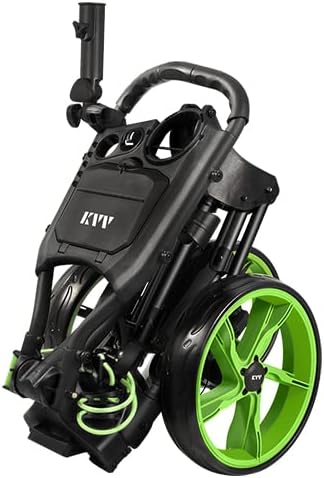
Best Compact: KVV Foldable Ultra Lightweight Push Cart
If your trunk is a hatchback, a small SUV with the seats up, or a sedan that already holds two golf bags, folding size decides everything. This KVV cart is built around the smallest folding footprint in the line and an ultra lightweight frame, and the new version adds a scorecard holder to go with the umbrella holder.
Lightweight cuts both ways. Less weight is easier to lift into a trunk and easier on your shoulders over a long round, and it also means a frame that can flex when you load it with a full staff bag and rain gear. When you set it up the first time, lean your body weight onto the handle and watch the joints. Some flex is normal. A joint that clicks or shifts is not.
The scorecard holder tells you who this cart is for. This is a walker's cart, not a caddie cart. You keep score, a pencil, and a yardage book on the handle and push it yourself.
The folding size claim is worth taking seriously if you travel with your clubs. A cart that fits in a travel bag or flat in the footwell of a rental car gets used. A cart that only fits in a garage does not.
What to check: measure your actual trunk opening against the folded dimensions, not against a marketing photo, and check the weight rating. Ultra lightweight frames and heavy staff bags are not friends.
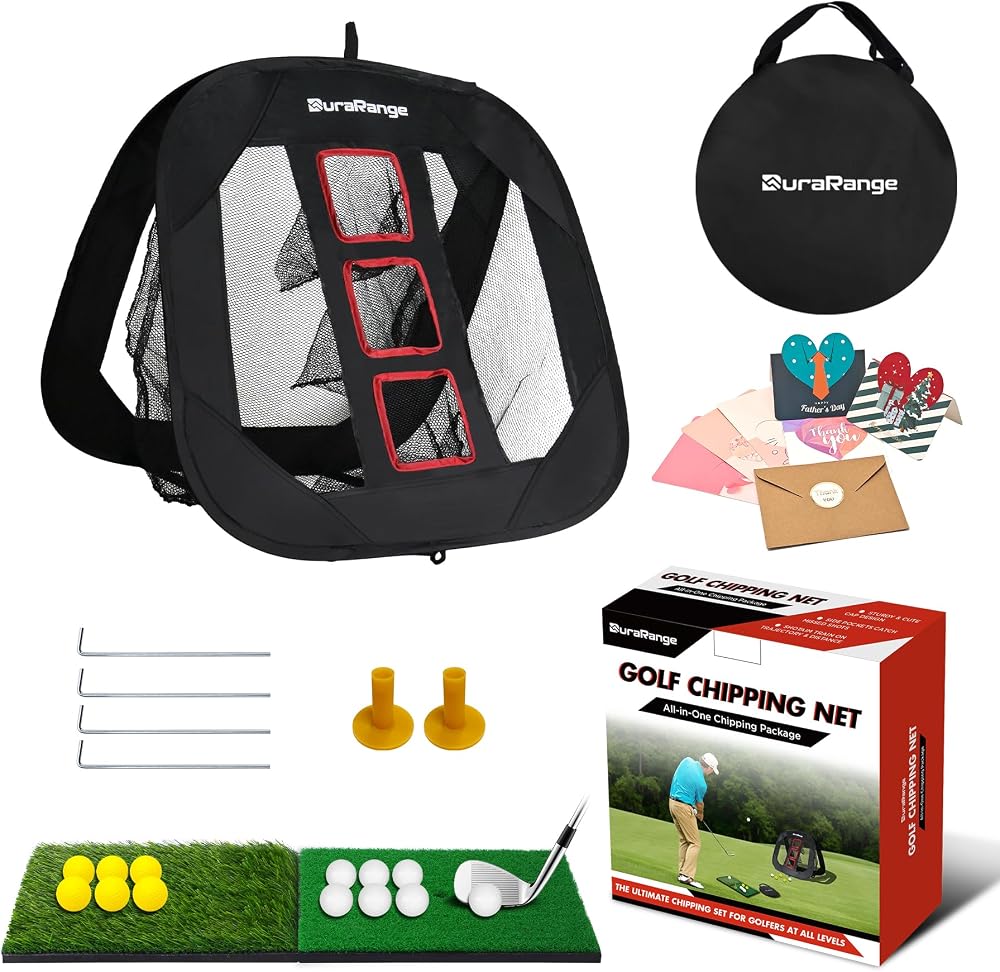
Best for Short Game: DuraRange Pop-Up Golf Chipping Net
Short game practice is where a modest purchase beats an expensive one, and I will argue that all day. You cannot hit full driver into a backyard net without eventually ripping it, but you can hit fifty chips and pitches a day into a chipping net, and fifty chips a day is how you stop chunking them on the course.
The DuraRange is a pop-up design with three targets, and the triple target layout is the part I like. One target teaches you to hit a spot. Three targets teach you trajectory and distance control, which is the actual skill. You aim high for a flop, low for a bump and run, and middle for a stock pitch, and you learn what your hands have to do to produce each one.
It folds flat and sets up in seconds, which is the entire reason pop-up nets exist. If setup takes five minutes, you will do it twice and quit.
The failure point on every net in this category is the netting, not the frame. Frames outlive everything. Cheap netting tears at the seams and around the target rings, and the first place it goes is wherever your miss pattern lives. So check netting weight and seam stitching before you buy, and consider a layer of extra padding behind the target you hit most. I have had a net split on me, and the lesson was not that nets are bad. The lesson was that netting is the wear item, and you plan for it.
Use real balls, not foam. For chips and pitches you are not swinging full speed, so the stress on the net is a fraction of what a driver puts on it, and real balls give you the contact feedback that makes practice worth anything.
Best Cheap Essential: Jiskan Club Cleaner Brush Combo
Clean grooves are free spin, and free spin is free strokes. A brush with a water reservoir is the tool that makes it happen, because a dry brush smears dirt along the groove instead of lifting it out.
This Jiskan combo is a two pack with a 7.5 inch squeeze bottle that holds 4 ounces of water and a brush head on top. You squeeze, you scrub, you wipe. The angled head gets into the grooves at the angle they are cut, and the reservoir means you are not spitting on your club face like an animal, which is what most players do because they do not carry one of these.
I have put this style of brush up against the pricier name brands in the category, and the design here holds up. The reservoir and the angled head do the same job for a lot less money.
The caveat is the lanyard. It is string, and string breaks. Mine snapped after about two years of hanging off a bag, which is a long run for a string, but it is the first thing to go. That is exactly why you buy the two pack: one for the bag, one for the garage or the cart, so a snapped lanyard does not end your setup. Buy two and skip the premium versions of a cleaning tool.
How I test this gear
I do not review gear on day one. I review it at week three and again at month six, and I keep a spreadsheet with rounds played, months owned, and balls hit per product. That habit started in the shop, where I watched people return gear that failed at month four with a story that began with "it was great at first."
For carts, the test is physical and boring. I fold and unfold them, load a full bag, push them across sloped fairways, and check the brake on a hill. I look at the folding latch and the wheel mounts every time, because that is where metal wears.
For nets, I hit real golf balls, not foam. My average ball speed is around 125 mph and I test like it. I watch the netting, the seams, and the target rings for stretch after every session.
For brushes, the test is a season of dirty wedges and one honest question: did the lanyard fail first, or the bristles?
I post durability updates on r/golf and in Amazon reviews, so you can see whether a product is still working at month six instead of guessing from a launch-week writeup.
Analysis and test results
The parts that fail in this category are predictable, and none of them are the parts the marketing talks about.
On push carts, the failures are the folding latch, the wheel bushings, and the brake mechanism. A cart with a swiveling front wheel takes less lateral load off the rear wheels, so the bushings last longer, which is a durability argument for the 360 design and not just a convenience one. Lightweight frames are great for lifting and they flex more, so if you carry a heavy bag, the compact cart is the one where you will notice it.
On nets, the failures are netting and seams. The frame outlives everything else. If you want a net to last, pad your most common miss and store it out of the sun, because UV kills netting faster than golf balls do.
On brushes, the failures are the lanyard and eventually the bristles. The reservoir and head design are solved problems at this price point, which is why I do not recommend spending more.
Here is the honest hierarchy. A push cart changes how your body feels after a round. A chipping net changes how many strokes you save around the green. A brush changes how your wedges perform. None of them are exciting, and all of them beat a new driver for the money, because a driver mostly changes what your bad shots look like.
The comparison table
| Product | Type | What it does | Best for | Price |
|---|---|---|---|---|
 Visit on Amazon → KVV 360 Rotating Front Wheel Push Cart |
3 wheel push cart | 360 degree front wheel, one second open and close, umbrella holder included | Walkers who want fast setup and easy steering | $219.00 |
 Visit on Amazon → KVV Foldable Ultra Lightweight Push Cart |
3 wheel push cart | Ultra lightweight frame, smallest folding size, scorecard holder and umbrella holder included | Small trunks, travel, and apartment storage | $179.99 |
 Visit on Amazon → DuraRange Pop-Up Chipping Net |
Practice net | Foldable triple target design for chipping and pitching drills, quick setup indoors or in the backyard | Daily short game reps at home | $42.88 |
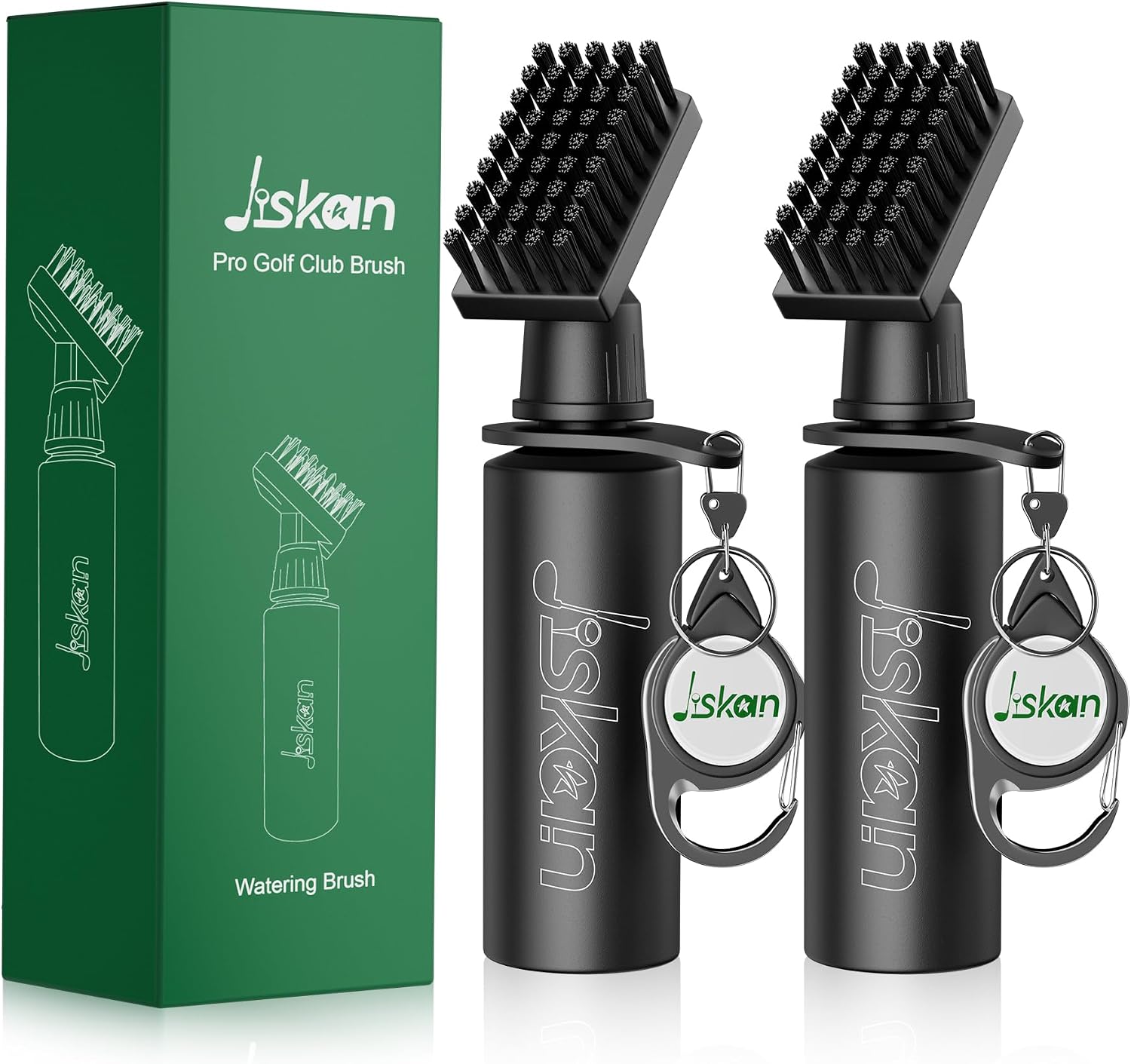 Visit on Amazon → Jiskan Club Cleaner Brush Combo |
Cleaning tool | Two pack, 7.5 inch squeeze water bottle that holds 4 ounces of water, angled brush head | Cheap, high-value bag essentials | $14.99 |
The table is the short version. The longer version is that carts solve a body problem, the net solves a practice problem, and the brush solves a spin problem.
Should you buy the KVV 360 rotating front wheel push cart?
Yes, if you walk. A front wheel that rotates 360 degrees and a fold that happens in one motion solve the two reasons push carts get left in the garage. Check the brake on a slope when it arrives, keep the wheels and bushings clean, and it should serve you for years. If your trunk is tiny, look at the compact KVV cart instead.
Should you buy the DuraRange pop-up chipping net?
Yes, if you will actually use it. Three targets make trajectory and distance control part of the drill instead of just hitting into a wall. Plan on the netting being the wear item, pad your most common miss, and store it out of the sun. If you want a net for full swings, this is not that net, and no cheap net is.
Should you buy the Jiskan club cleaner brush combo?
Yes, and buy the two pack. Clean grooves are free spin, the reservoir and angled head do the job, and the only weak point is the string lanyard that snapped on me after about two years. Two brushes means one failure does not end your setup, and it is the cheapest way to protect the wedges you already own.