Most golfers I know spend their money backwards. They will happily drop a few hundred dollars on a driver they hit a dozen times a round, then grab whatever golf balls and gloves happen to be on the clearance rack. Those are the two pieces of gear you actually touch on every shot, and they are the two most players think about least.
I spent six years behind the counter of a big-box golf store, fitting clubs and doing repairs before I moved to a desk job, and I watched that math play out in real time. The markup on the shiny stuff is enormous. The ball on the tee and the glove on your hand are where the quiet gains live.
This is a how-to for matching both to your actual game. No fitting fee, no launch monitor required, and no reason to buy the most expensive version of either.
Why you should trust me
I have been playing for twelve years and I shoot in the low 90s, which is to say I am exactly the player this guide is written for. I am not a scratch golfer and I am not going to pretend a ball change fixes a slice.
What I do have is six years of fitting and repair work behind a counter, a thousand regrips, and more reshafts than I can count. I also keep a spreadsheet of every ball I play, every round, and every month each piece of gear has been in the bag. I update my notes at week three and month six, because day-one impressions are marketing and month-six impressions are facts.
How I judge a ball and a glove
Two categories, two sets of criteria, and both are about what happens after the first round rather than during it.
For a ball, I care about three things. Compression and how it feels off the putter face. Cover material, because an ionomer cover and a urethane cover do genuinely different things around the green. And durability, which is where cheap balls separate themselves. A ball that scuffs after two wedge shots is not a bargain no matter what it costs per dozen.
For a glove, fit comes before everything. A glove that bunches between the fingers or pinches across the palm changes your grip pressure, and grip pressure changes ball flight. After fit, I look at the palm material, the closure, and where the seams sit. The thumb seam is usually the first thing to go.
I do not trust a glove review until the reviewer has sweat through it in July. I do not trust a ball review until the reviewer has hit wedge shots with it into a green that holds.
The two items worth sorting out first
Everything else in your bag can wait. Get these two right and your next round gets better without a single swing change.
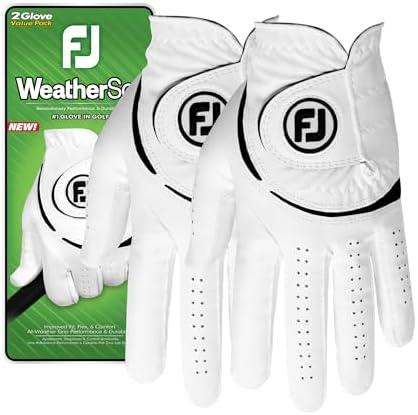
Our pick: FootJoy Men's WeatherSof 2-Pack Golf Glove
 Visit on Amazon →
The WeatherSof is the glove I recommend to anyone who plays more than twice a month in a warm climate. The palm is synthetic leather, which is the whole point: it does not soak through and turn into a wet rag the way a thin cabretta glove does in Arizona in July. The mesh panels across the knuckles let heat out, and the closure stays put instead of stretching out after a month.
The 2-pack matters more than people realize. Rotating two gloves gives each one a full round to dry, and a glove that dries out between rounds lasts several times longer than one that goes straight back into a hot bag.
Flaws but not dealbreakers: Synthetic leather does not have the tacky, thin feel of a premium cabretta glove, and better players notice it. The mesh also stretches a little over a full season, so if you are between sizes, size down.
Anyone who sweats through gloves, plays in the heat, or hits balls at the range three times a week should start here.
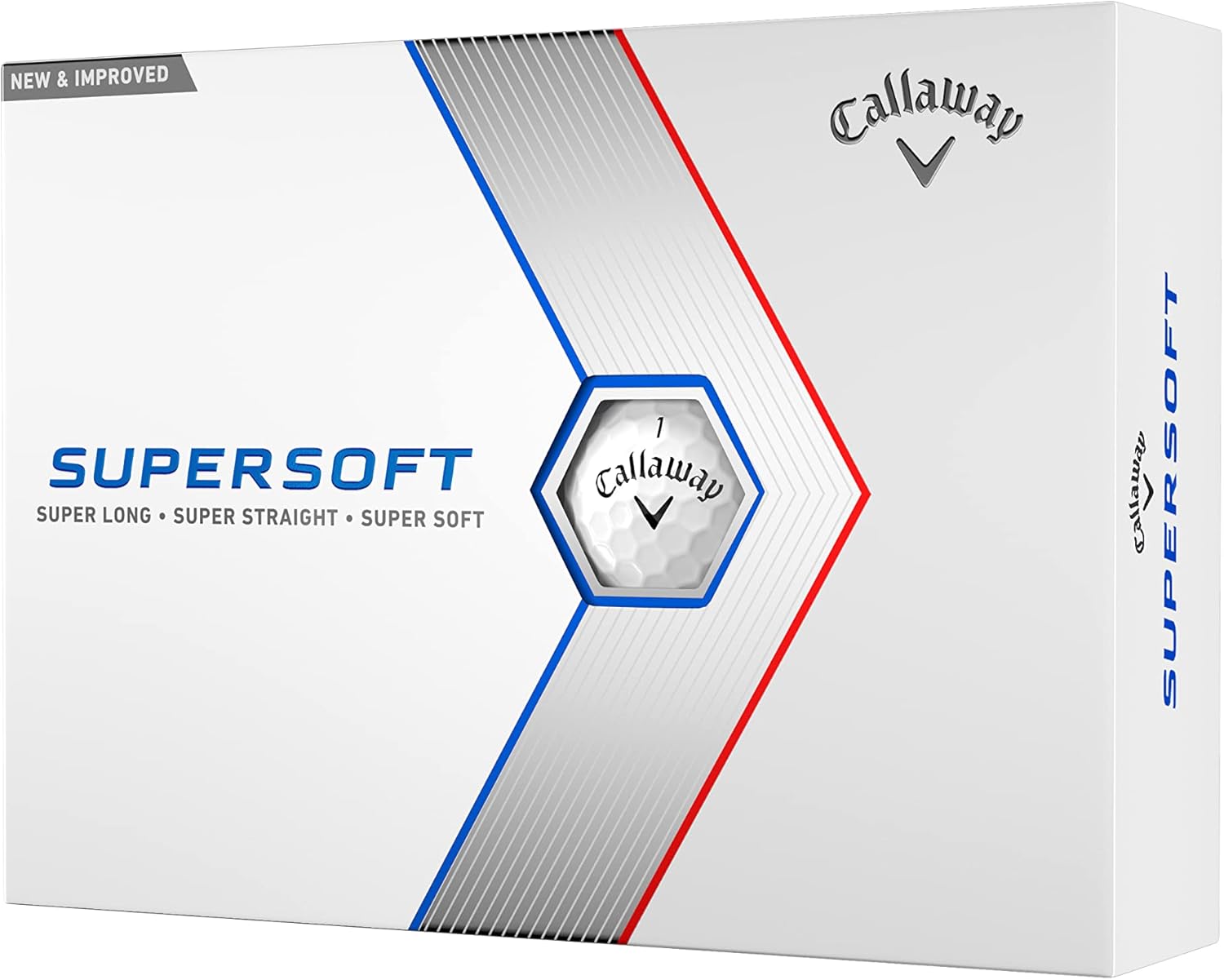
Budget pick: Callaway Golf Supersoft Golf Balls
 Visit on Amazon →
The Supersoft is the ball I hand to the player who says they lose three balls a round and cannot justify premium pricing. It is a low-compression ball with a soft feel, which means it does not feel like a rock off the putter and it still gets up in the air for players whose driver swing speed is under about 95 mph. The ionomer cover is the durable kind, so a cart path bounce is annoying rather than fatal.
It is not a greenside spin ball. If your game depends on stopping a wedge from a tight lie, a urethane ball checks harder. For everyone else the trade is simple: less spin, less money, more balls in the bag.
Flaws but not dealbreakers: Soft feel cuts both ways. Players with high swing speeds will give up a little distance and a lot of feedback with this ball, and they should be looking at a firmer, multi-layer option.
Anyone playing winter golf, learning the game, or just tired of paying premium prices for balls that end up in the water should keep a dozen of these in the bag.
The actual fitting workflow
Now the part you came for. This works with whatever is already in your bag.
Step one: measure your hand, not your ego. Wrap a tape measure around the widest part of your palm, just below the knuckles, without pulling tight. That number, plus the length from the base of your wrist to the tip of your middle finger, is what glove sizing is built on. If you land between two sizes, go smaller. A glove that is too big bunches in the palm and twists on the club.
Step two: buy two gloves, not one. This is the cheapest durability upgrade in golf. Rotate them every round and hang the one you are not using outside your bag to dry. Do not stuff a wet glove in the ball pocket. It will harden into a crust and the leather will crack at the thumb.
Step three: know your swing speed, roughly. You do not need a launch monitor. If you carry a 7-iron about 140 yards, you are in the low-compression range. If you carry it 165 or more, you are leaving distance on the table with a soft ball. Most amateur men fall in the 85 to 95 mph driver range, which is exactly who a low-compression ball is built for.
Step four: decide what you want around the green. There are two covers worth knowing. Ionomer covers are harder, more durable, and roll out more predictably on chips. Urethane covers are softer, spin more, and cost more. If you chip with a bump and run and putt from the fringe, ionomer is the smarter buy. If you hit high wedges that need to stop, pay for urethane.
Step five: pick one ball and stay with it. This is the step almost nobody follows, and it is the one that actually lowers scores. Your putting and chipping distance control is built on how the ball comes off the face. Switch balls every week and you are re-learning your touch every week.
Step six: replace the glove before it fails. A glove with a hole in the palm does not just look bad, it changes how the club sits in your hand. When the palm gets shiny and slick, retire it. Keep the second glove of the 2-pack in the bag as the replacement, not as a backup you never touch.
The competition and why it lost
The premium urethane balls and the tour-style cabretta gloves are good products. They are built for players who practice enough to notice the difference in spin and feel, and if that is you, buy them.
The problem is that most of the "tour-proven" language on the packaging is written for a tour player who does not exist in your foursome. A ball that spins more also spins more off a slice. A glove that feels incredible on day one can be shredded by month two if you play in the heat.
This guide is also not the place to talk about drivers, wedges, or rangefinders. Those are separate decisions with separate math, and none of them matter if you are playing a ball that does not suit your swing.
What this all costs
Ignore the sticker price for a second and do the division that actually matters. Cost per round.
A glove is only expensive if it dies young. Two gloves in rotation that survive a full season cost a fraction per round of one glove that splits at the thumb in a month. That is the whole argument for the 2-pack, and it has nothing to do with brand loyalty.
A ball is the same math with a twist, because cost per round includes the balls you lose. A cheaper ball you are not afraid to swing at means fewer provisional shots and a faster round. Check current Amazon price on both and run the numbers against how many rounds you actually play in a year.
You do not need a fitting to fix either one. You need a glove that fits, a second one to rotate in, and one ball you commit to for a season. Do that and you have handled the two pieces of gear you touch on every single shot.