Wedge spin is the cheapest distance control in golf, and most players throw it away in the parking lot. Sand, dirt, and dried range ball crud pack into the grooves, the ball slides up the face instead of grabbing it, and the 60 yard wedge you practiced all winter starts flying 68 and rolling out. Nobody notices, because nobody measures it.
A golf groove sharpener takes 30 seconds to use and costs less than the balls you are about to lose. Pair it with a launch monitor and you can watch the spin number move, which is the difference between believing your wedges are fine and knowing it.
I have been fitting and repairing clubs for years and playing for twelve, and I will tell you the same thing I told customers at the counter: your grooves are a wear item, not a feature. Treat them like one.
Why you should trust me
I spent six years behind the counter of a big box golf store as a club fitter and repair tech. I have regripped somewhere north of a thousand clubs, reshafted drivers, and watched the markup math happen in real time. I have also been burned by gear that looked great in a listing and fell apart inside a season, which is why I keep a spreadsheet on everything I play: balls hit, rounds played, months owned.
I shoot in the low 90s and I am fine with it. My ball speed with driver sits around 125 mph, which means I test practice gear with real balls at real speeds, not foam. I post durability updates at week three and month six, and I say so in the review.
When a product does not have six months on it yet, I tell you that too. You will see it below.
How I picked and how I tested
The two items here are not a matched set. One is a maintenance tool that costs about what a dozen premium balls cost, and the other is a launch monitor that reports spin indoors and outdoors. I picked them because they answer the two halves of the same question: are my wedges clean, and are they actually spinning?
For the groove tool, I have months of use on it, so the durability opinion is mine. For the launch monitor, I am working from the product listing and from the questions I would ask before spending the money, because I do not have a full season logged on this unit yet. I am not going to invent a test I did not run.
What I look for in this category: does the tool sit into a groove without gouging the face, does it hold water so grit gets flushed instead of smeared around, and does the lanyard survive a season clipped to a bag. On the monitor side: does it report spin on partial wedges, how much ball flight does it need indoors, and what does it cost to keep using after year one.
What clean grooves actually buy you
Grooves do one job. They channel water, sand, and grass away from the contact point so the face can grip the ball. When they are packed with junk, the ball has less to grab, and the result is lower spin, higher launch, and more roll out. That is not a feel thing. It is friction.
Clean grooves are free spin. The USGA limits how sharp and how deep grooves can be, so this is not about cheating, it is about getting back to the legal surface you already own. A groove tool clears out compacted material and refreshes the edge of the groove. It does not add spin beyond what the club was built to produce.
The second thing clean grooves buy you is consistency. Ten wedges that all fly the same number is worth more than one perfect strike. If your spin number swings because your grooves are half full of dirt by the fourth hole, your carry number swings too.
The two tools this routine needs
One tool cleans, one tool measures. That is the whole shopping list.
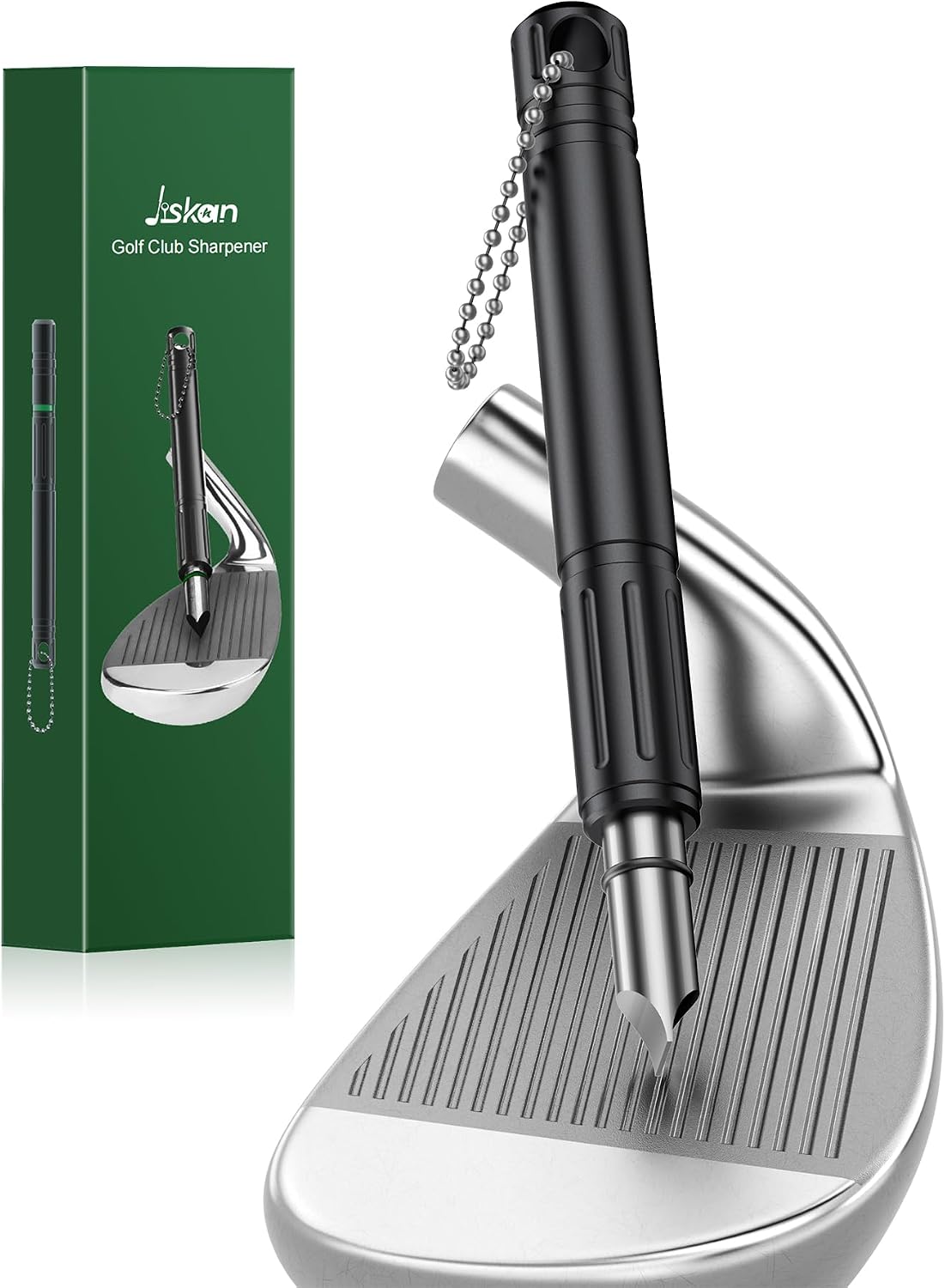
The groove tool: Jiskan Pro Golf Club Grooves Sharpener Cleaner Tool for Wedges&Irons, Essential Golf Accessories Golf Gifts for Men Cool Golf Gear Unique Golf Bag Accessories Golf Gadget
 Visit on Amazon →
This is the one I actually own, and it is a buy with one caveat. The angled head and the built-in water reservoir are the two features that matter. The angle lets you run the tool along a groove heel to toe without digging into the face, and the reservoir means you are flushing grit out of the groove instead of pushing it around in a dry paste. It works on wedges and irons, and it lives in the bag pocket next to the balls.
The caveat is the lanyard. It is string, and mine snapped after about two years of heavy use. That is the entire complaint. For the money, buy two and keep the spare in the garage.
Flaws but not dealbreakers: It is a plastic tool with a metal tip, not a machine shop instrument. If you go at it like you are re-cutting grooves, you can scratch a face. Light passes, heel to toe, is the whole technique.
Anyone who plays more than twice a month and has never cleaned their grooves properly will get the money back in the first round.
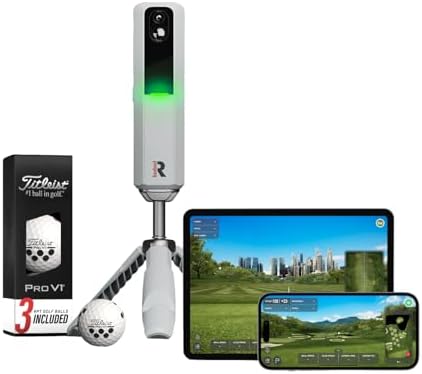
The data tool: Rapsodo Golf Launch Monitor - Swing Analyzer, Spin Rate, Indoor/Outdoor, 3 Pro V1 Balls
 Visit on Amazon →
The listing describes a launch monitor that reports swing data and spin rate, works indoors and outdoors, and ships with three Pro V1 balls. Spin rate is the number that makes this routine work, because spin is the thing clean grooves change.
I do not have a full season on this unit, so I am not going to hand you a durability verdict I have not earned. What I can tell you is what it has to do to be worth the money: report spin on partial wedge shots rather than only driver, hold a consistent reading indoors with limited ball flight, and give you the same number on the same strike twice in a row. If it does those three things, it belongs in a backyard practice setup.
The included Pro V1 balls matter more than they sound. Groove and spin testing with range balls tells you almost nothing, because a worn range ball will not spin off a clean wedge the way your gamer will.
Flaws but not dealbreakers: Indoor use means you need a net and enough room for the unit to read the ball. This is not a phone app you point at the sky. Check your ceiling height and your net situation before you order.
Anyone who wants spin numbers without paying fitting studio money should look here first.
The 30-minute groove and spin routine
Now the part you came for. This works with any monitor that reports spin, and it works without one if you are honest about what you are seeing.
Step one: get a baseline. Hit ten wedge shots with your grooves exactly as they are right now. Same ball, same target, same swing. Write down carry and spin. This is your before number, and it is the only way to know whether any of this matters.
Step two: clean the face and the grooves. Fill the reservoir, run the angled head along each groove heel to toe, then wipe the face with a towel. Do the other two wedges while you are standing there. Thirty seconds per club.
Step three: hit ten more. Same ball, same target, same swing. Compare the spin number to step one. On a wedge that was genuinely packed with dirt, you should see the number move. On a wedge that was already clean, you will not, and that is useful information too.
Step four: check the face for wear. Look at the grooves in direct light. If they are rounded over, or the face between them is shiny and smooth, cleaning will not bring the spin back. That is a worn face, and the only real fix is a new wedge. A groove tool refreshes, it does not rebuild.
Step five: log it. Date, ball, spin, carry, and how many rounds are on the wedge. I keep this in a spreadsheet. Week three and month six are when I update a review, and the same schedule works for your own clubs.
Step six: repeat before rounds that matter. Wet rough and morning dew are exactly when clean grooves earn their keep. It takes 30 seconds on the first tee.
What clean grooves cannot fix
- A worn face. Once the groove edges round over, no hand tool brings them back to spec.
- Technique. If you are flipping through impact, adding loft, and catching the ball thin, spin stays low no matter how clean the face is.
- The ball. A scuffed ball or a rock hard range ball will not spin off a clean wedge.
- Wet conditions. Water cuts friction. Clean grooves help most in the moments where friction matters, but they do not beat a soaked club face.
- Illegal grooves. The USGA sets depth and edge limits, and a tool that cuts past them is a problem, not an upgrade.
The competition and why it lost
There is a version of this article that recommends a premium launch monitor costing as much as a full set of irons, plus a groove tool with a brand name on the handle. That version is not useful to most players.
The expensive monitors are excellent. They also measure things most of us never use, like club path to a tenth of a degree, and the price reflects a fitting studio budget. If you are chasing a tour card, buy the expensive one. If you want to know whether clean grooves changed your spin number, you do not need it.
The pricier groove brushes have nicer handles and better lanyards. They also cost several times more and clean a groove the same way. I would rather own two of the cheap ones and a spare towel.
Rangefinders and practice nets belong in their own guides. This one is about wedge maintenance and the numbers that prove it worked.
What this all costs
Two purchases, one workflow. The groove tool is the small one, and it is the one that pays for itself first. The launch monitor is the bigger commitment, and it is the one to buy only if you are actually going to use it more than twice.
Run the math on cost per session. A monitor that gets used every weekend in the backyard for a year is a far better deal than the same monitor sitting in a closet, and that holds true at any price. Check current Amazon price on both, then divide by the number of sessions you honestly expect. If that number makes you wince, start with the groove tool and a clean towel, and add the monitor once your practice has a habit behind it.
The routine itself is free. Ten balls, a clean face, ten more balls, and one number in a spreadsheet. That is the whole thing.
Clean grooves are free spin. Measure it once and you will not go back to hitting wedges with a face full of dirt.