Most golfers who fight a slice are not losing to a swing flaw first. They are losing to their own eyes. Stand behind a player on the range and watch where the feet point versus where the ball starts, and you will usually find a gap of several yards. The body aims right, the brain swings left to save it, and the ball never has a chance.
Golf alignment rods are the cheapest way to close that gap. Two sticks on the ground cost less than a box of premium balls and they will tell you the truth about your aim in about 30 seconds. No launch monitor, no lesson package, no new driver.
I spent six years behind the counter of a big box golf store as a club fitter and repair tech before I moved to a desk job. I have regripped a thousand clubs and reshafted more drivers than I want to count. The lesson from that job is simple: most amateur misses start before the swing does. Aim is free to fix. Equipment is not.
This guide is the setup I would hand to any player who walks onto a range with a bucket of balls and a vague sense that something is off. Two pieces of gear, one layout, and a drill order that actually transfers to the course.
Why you should trust me
I have been playing golf for twelve years and I still shoot in the low 90s, which I am fine with. Before the desk job I spent six years fitting clubs and fixing them. I have watched a premium driver come through the door at a wholesale cost that would make you angry, and I have watched cheap gear outlast expensive gear more times than I can count.
That job is why I do not trust a product because of the logo on it. It is also why I keep a spreadsheet of every ball hit, round played, and month owned on the gear I use. Durability is the spec that matters to me, and it is the spec nobody prints on the box. When I recommend something cheap, it is because I have watched cheap gear do the job that expensive gear gets credit for.
Aim is the one part of this game you can fix for almost nothing. That is why this guide exists.
What actually matters when you buy these two things
A rod is a rod, mostly. The differences that matter show up on the third range session, not the first.
For alignment rods, I care about four things. Extended length, because a rod that is too short cannot give you a full feet line. Locking joints, because a telescopic rod that wiggles is a stick that lies to you. Magnetic tips, because that is how the rods stay attached to a cart frame or a clubhead instead of rolling around in the trunk. And tip caps, because a bare fiberglass end will eventually punch through the bottom of your bag.
For a glove, fit beats material every time. A glove that bunches in the palm costs you grip pressure you cannot get back. Measure from the crease at your wrist to the tip of your middle finger, check the size chart, and buy the size that chart says, not the size you wore in a different brand. The closure strap should land in the middle of its range. If it is maxed out on day one, the glove is too small and it will split at the seam inside a month.
How I picked these two
I did not need to swing either product to know whether the design made sense. That is the advantage of spending six years fixing gear instead of just selling it.
Here is the filter. Does it solve the actual problem? Does it survive a season in a bag? When it breaks, is it cheap to replace? And what does it do that a free option does not?
Both items below pass. The rods pass because they replace a driveway marker with a tool that collapses into a side pocket and sticks to a cart. The glove passes because it does the one job a glove has, which is keeping the club from moving in your hands when the temperature climbs, without asking you to pay premium leather money for it.
The alignment tool you actually need
If you buy nothing else from this guide, buy the sticks. They are the highest return per dollar in golf practice, and it is not close.
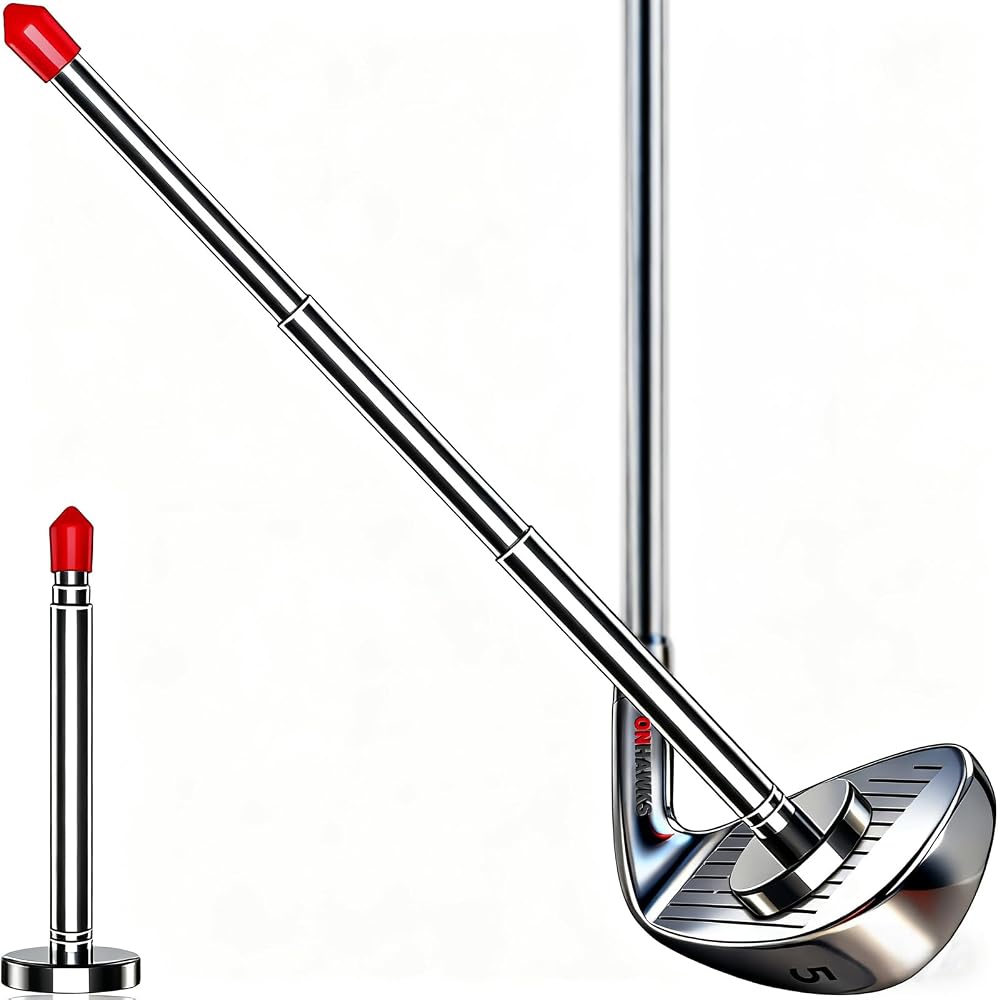
Budget pick: Golf Alignment Rods - Club Alignment Sticks with Telescopic Magnetic Corrector Trainer Aid Tools Help Visualize and Align Your Golf Shots Club,Swing Aim Practice Accessories Golf Gifts
 Visit on Amazon →
These are the telescopic kind, which is the version I would tell a friend to buy over solid fiberglass rods for one reason: they fit in a side pocket of your bag. The solid ones are fine until you have to strap them to the outside of a carry bag or leave them in the trunk, which is where most alignment rods go to die.
The magnetic ends are the second reason. You can clip a rod to a cart frame or lay it against a clubhead while you set up, which means you are not hunting for it in the grass between shots.
What I would check before trusting them: extend both rods fully and see whether the joints lock. A rod that holds its length is a feet line. A rod that collapses under its own weight is a nuisance. If you hit a ball into the rod, a thin composite rod can snap, so keep the second rod at least a clubhead outside the ball.
Flaws but not dealbreakers: telescopic rods are never as stiff as a solid rod, so treat them as an aiming reference and a gate, not as a straight edge for a swing plane board. For most of what you will do on a range, that is plenty.
Any player who has never checked their aim on video is the right buyer for these.
The glove that keeps the grip consistent
A glove is the cheapest piece of consistency in your bag, and most players buy it last. It also has a direct effect on how well the alignment work holds up, because a club that shifts in your hands makes every start line check meaningless.
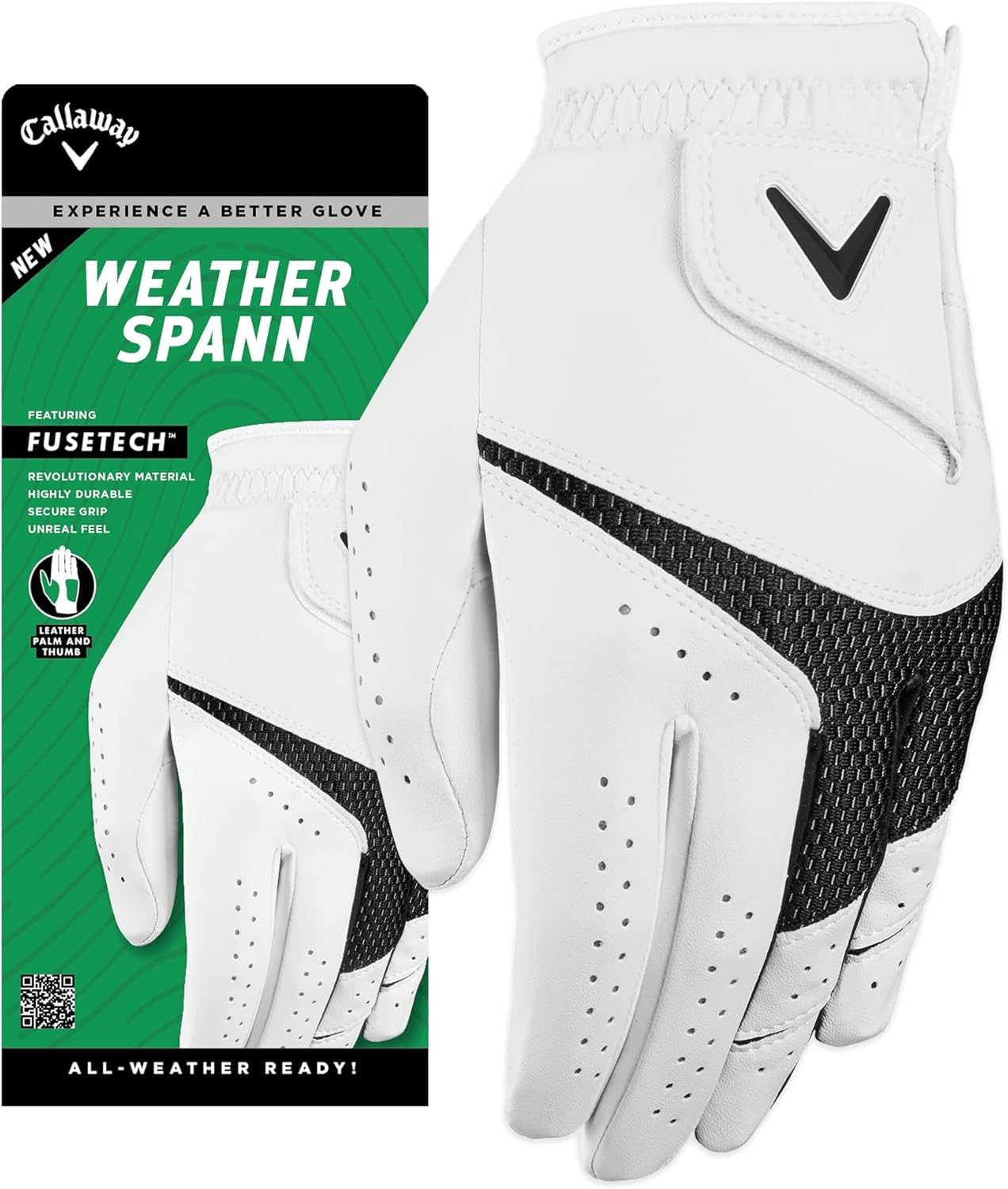
Our pick: Callaway Golf Weather Spann Glove
 Visit on Amazon →
The Weather Spann is built for the conditions most of us actually play in: heat, humidity, and the occasional drizzle. If you have ever felt a slick grip on the first tee in August, you already know why an all-weather build matters more than a fancy label.
The wear point on any leather glove is the heel of the palm, where the butt end of the club sits. That is true of a premium glove and it is true of this one. Two habits stretch the life of any glove: take it off between shots so the leather dries, and rotate two gloves instead of killing one. If you play four or five times a month, a rotation of two will outlast a single glove by a wide margin.
Fit is the whole game here. Snug across the palm, no fabric bunched under the heel, and the closure strap landing mid-range. Measure your hand rather than guessing, and check the size chart before you order.
Flaws but not dealbreakers: an all-weather glove trades a little feel for grip in wet conditions. If you only play in dry heat and want maximum feedback, a thinner leather glove will feel better, but it will not help you on a humid morning.
Anyone who plays in the heat, walks a course, or has ever thrown a club because the grip slipped will get their money's worth.
The actual alignment workflow
Now the part you came for. This works on any range with a flat-ish patch of grass or mat.
Step one: Pick a target and commit to it. Choose something specific. A flag, a sign, a tree trunk. "The middle of the fairway" is not a target, and you cannot check your aim against a vibe.
Step two: Lay the first rod at your feet. Set it on the ground just outside your trail foot, pointing at your target. Then step in so your toes run parallel to the rod. This rod checks body aim. If your feet are open or closed to the rod, you will see it immediately, and you will feel it as soon as you look down.
Step three: Lay the second rod outside the ball. Put it a clubhead or more outside the ball, also pointing at the target. This creates a rail you can use to check start line and path. If the ball starts left of that rod, your path or face is doing something you did not plan.
Step four: Look down after every shot, not up. This is the step everyone skips. Your instinct after contact is to follow the ball. Instead, hold your finish and look at your feet against the rod. Five shots in, you will start to see the pattern: aimed left, aimed right, or actually square.
Step five: Hit in sets of ten. Ten balls with the rods, then five without, keeping the same target. The point of the rods is to build a reference you can feel without them. If you never take them away, you have built a range swing that only works with sticks on the ground.
Step six: Use the rods for ball position. Lay a rod perpendicular to your target line, at the ball. Now step in and check where the ball sits relative to your lead heel. Most players are shocked at how far back or forward the ball actually is compared to where they thought it was. Dialing in ball position does more for contact than most swing thoughts.
Step seven: Add the glove check. With a glove on, grip the club and check your pressure. You should feel the club in your fingers, not buried in your palm. A glove that bunches pushes the club into your palm, which is the death of a consistent release.
Step eight: Log it. Write down what you aimed at and what the ball did. I keep a spreadsheet of every range session, and the pattern is always more honest than my memory.
A note on the rules: alignment rods are practice tools. Using an alignment aid during a stipulated round is a penalty under the Rules of Golf, so leave them in the car when you tee it up for real.
What these two tools will not fix
They will not fix an open clubface. They will not fix an out-to-in path if you are already aimed correctly. They will not fix early extension, a weak grip, or a swing that comes from the wrong place.
What they do is remove the excuse. If you set up square and the ball still curves, you now know the problem is in the swing and not in your eyes. That is worth more than it sounds, because it stops you from buying a new driver to fix an aiming problem.
They also will not replace a lesson. If your aim is square and your ball flight is a two-way miss, book an hour with a pro and bring the rods so you can show them what you were working on.
What this all costs
Nothing in this guide requires a launch monitor, a net, or a fitting. Check current Amazon price on both items and compare that number to a single bucket of range balls. Then compare it to the cost of the driver you were thinking about buying to fix a miss that started with your feet.
The rods are the priority. The glove is the support act. Together they cover the two things you control before the club ever moves: where you aim, and whether the club stays in your hands.
Do this twice a week for a month. Your aim will be the least of your problems, which is exactly where you want it.